Sailing under the
Golden Gate
 · Arlington · München · San Francisco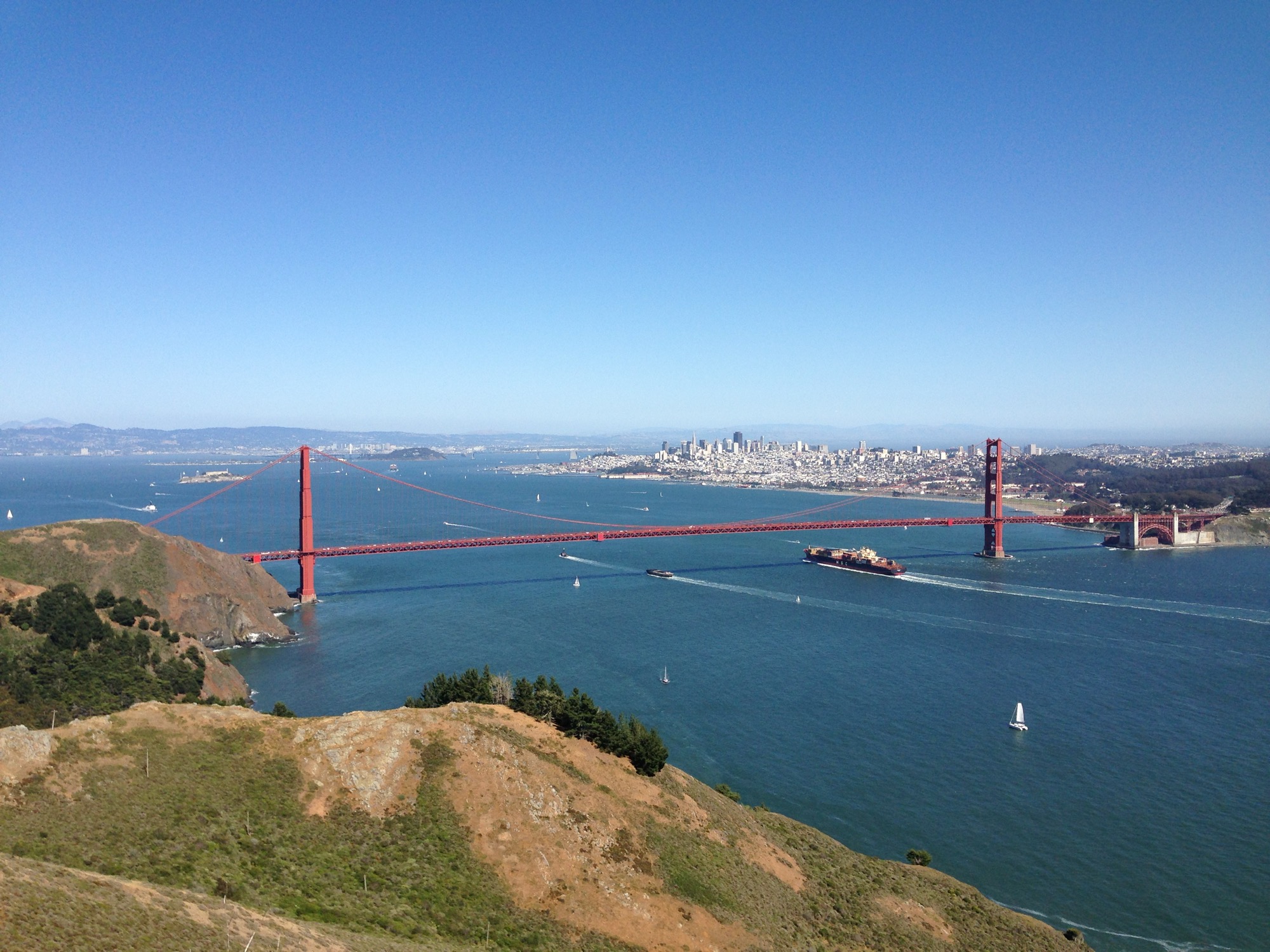
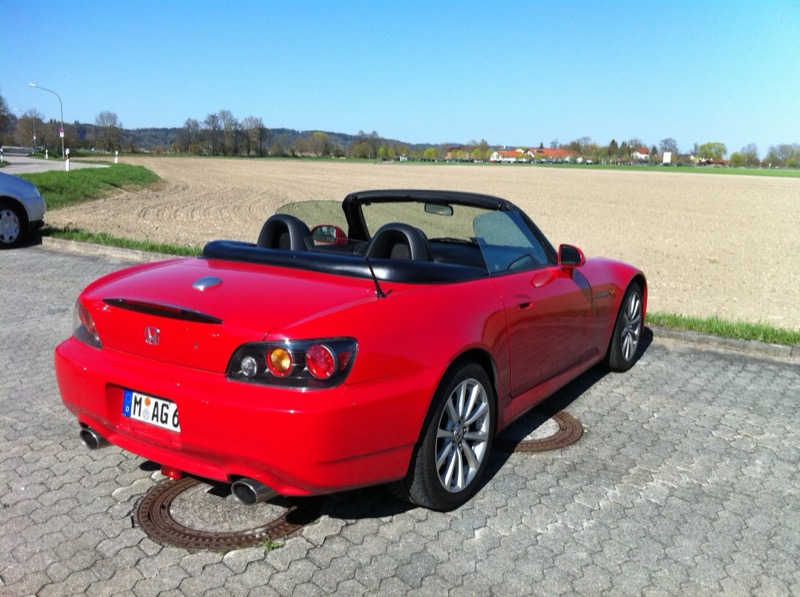
There are a lot of people who look at the Honda S2000's sleek styling and see a wanna-be Ferrari. They see a handsome roadster shape, a red paint job, a silhouette—and they think it's a design exercise.
The body is lovely. But the styling is the cherry on top. Let me explain.
Before I became a long-term steward of my 2006 AP2, I used to be a docent at the Smithsonian's National Air & Space Museum. When you spend enough time around the history of flight, explaining winged artifacts to visitors on the floor of the Udvar-Hazy Center, you begin to realize that the most important aircraft in human history were never defined by their outer skins. Dedicated mechanics get it, and venture under the entrance ramp to marvel at the engines on display.
Iconic flying machines were defined by what propelled them.
The Concorde is a beautiful delta-wing, but it is nothing without the Rolls-Royce/SNECMA Olympus 593 turbojets that pushed it to Mach 2. The SR-71 Blackbird is a titanium masterpiece, but its existence relies entirely on the Pratt & Whitney J58 axial-flow turbojets paired with its mixed-compression axisymmetric intake. (Air-breathing engines operate with subsonic airflow even when doing Mach 3+.) The Space Shuttle was a triumph of orbital design, but it was born on the back of the Rocketdyne RS-25 liquid-propellant rocket engines. The Packard V-1650 Merlin of the later model P-51s... I could go on.
Each of these engines didn't just power the thing—they made the craft what it is.
That is the lens through which we have to look at this car. Those of us who have been lucky enough to drive the S2000 know it's the engine, whether the F20C or the F22C1, that makes this car special. Yes, it's a car engine not a turbojet, but this heart is the reason every driver loves it, and why it commands a kind of reverence that few modern sports cars ever achieve. Even former SR-71 pilot docents talk about the propulsion system.
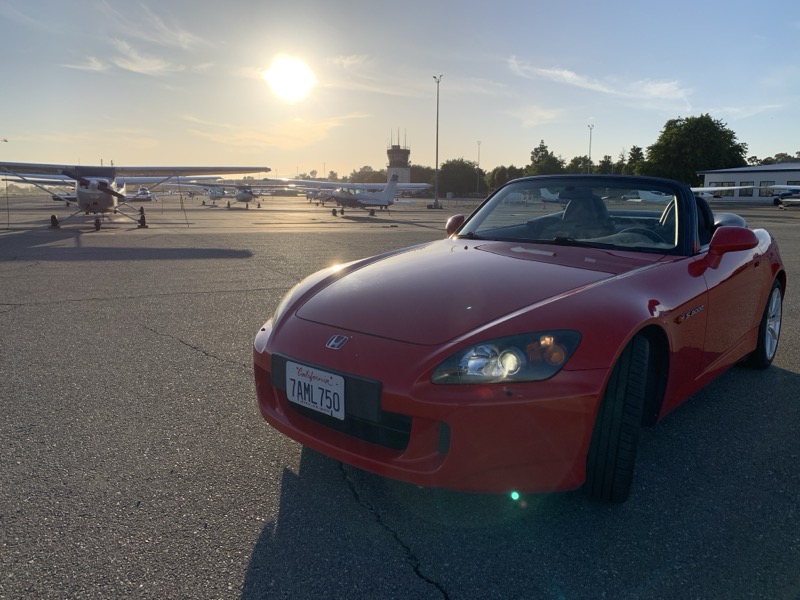
Honda's engine is a masterpiece of naturally aspirated engineering, built in-house at Suzuka to racing tolerances, with a mechanical harmony that makes the car feel less like a commuter vehicle and more like a low-flying aircraft.
Whatever AP camp you're in, whatever year you think is best, we're all part of the tribe that cherishes the way this car was built and how it performs. We aren't collectors of static art pieces or showroom silhouettes. We are curators of a mechanical legend.
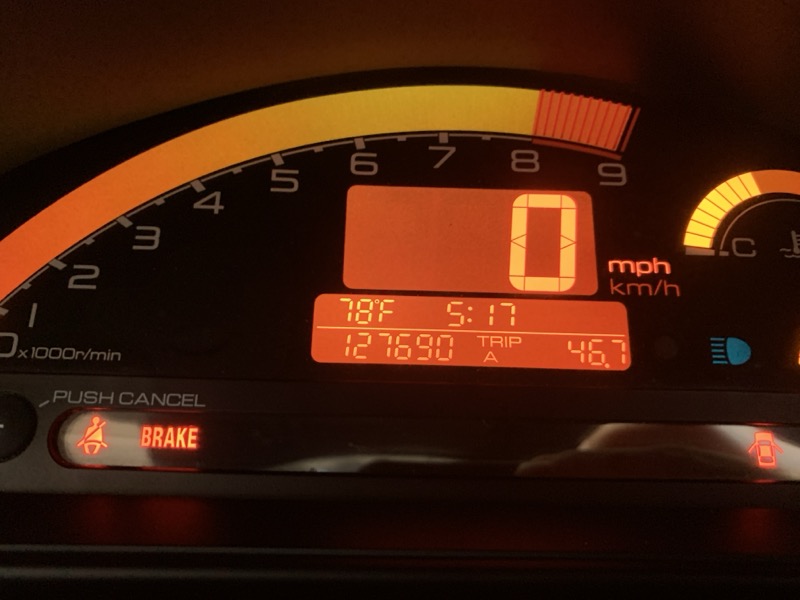
I've spent 20 years and 127,000 miles listening to that mechanical symphony across multiple continents. And after a recent transition to a brand-new factory HOP crate short-block paired with a masterfully built head, I was reminded all over again: we don't drive a wrapper. We drive an engine.
Chapter IThe Journey of the Chassis: From Suzuka to the Potomac
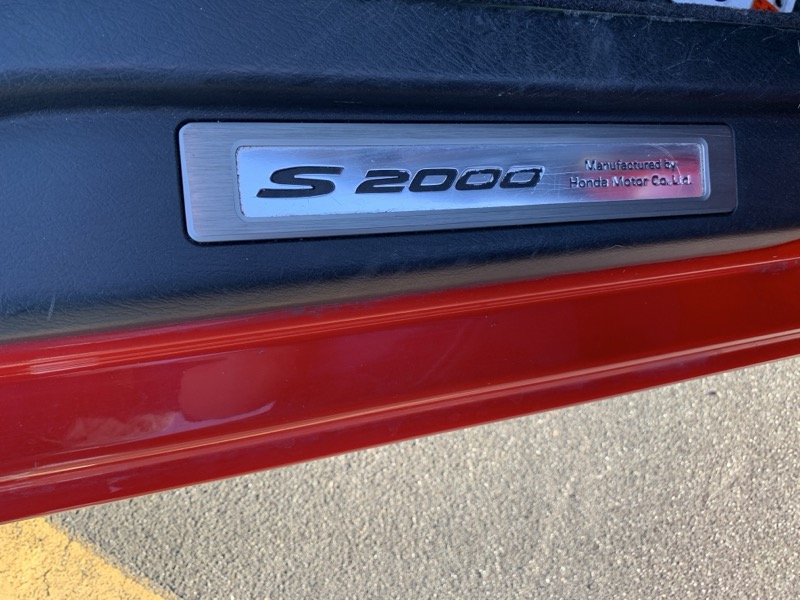
Before that engine could ever sing, a chassis had to be born. It began its life in 2006 at Honda's flagship Suzuka plant in Mie Prefecture, Japan. To understand the sheer scale of my S2000's survival (VIN: JHMAP21446S004903), you have to realize that this machine was a global voyager before it ever accumulated a single mile on an open road. It was loaded onto a massive roll-on/roll-off cargo vessel, and crossed the Pacific Ocean, slipping eastward through the Panama Canal, navigating the Caribbean Sea, and finally crossing the Atlantic to arrive on the eastern seaboard of the United States.
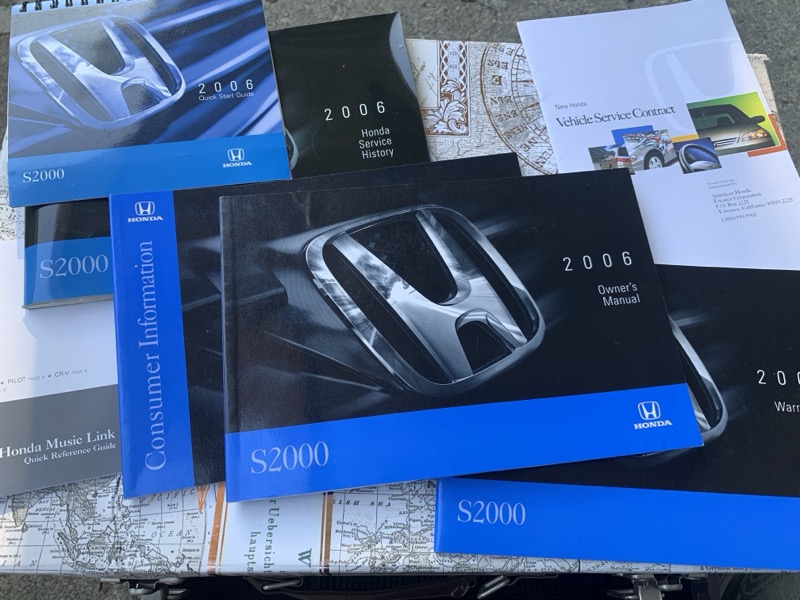
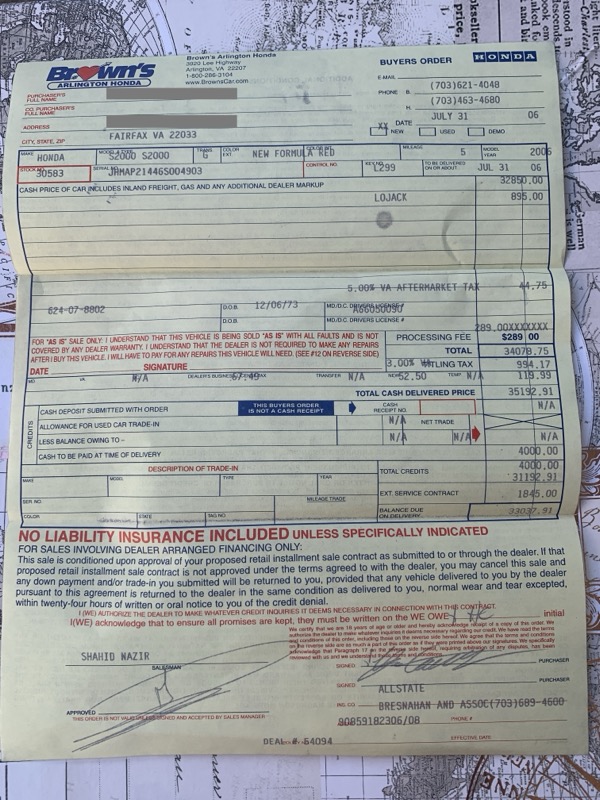
Waiting for it at Brown's Honda dealership in Arlington, Virginia was a recently divorced 32-year-old kid who had spent years dreaming of this exact moment. It was a dream sparked in the final years of the 20th Century when I saw the first conceptual sketches of the SSM roadster in a magazine.
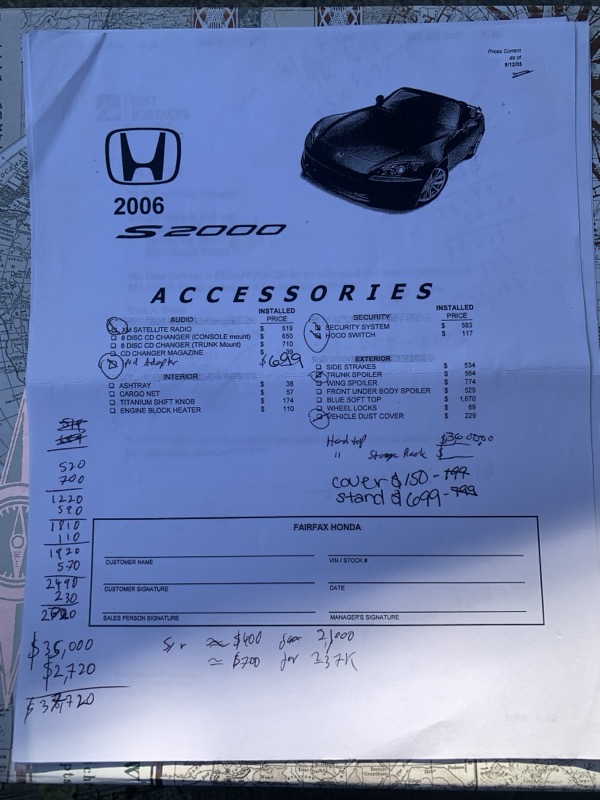
When the time came to negotiate the price, the gravity of the moment briefly short-circuited my tongue. I inadvertently looked the dealer in the eye and offered $22k, when I had fully meant to say $32k. The room fell into silence. The dealer stared at me, caught off guard, clearly feeling that I had just insulted the engineering value of Honda's crown jewel. We corrected course, the papers were signed, and a choice had to be made about preserving the pristine lines of the trunk. I debated spoiling that sleek rear deck with a factory wing or an XM radio antenna; ultimately, I chose the connection to music beamed from outer space.
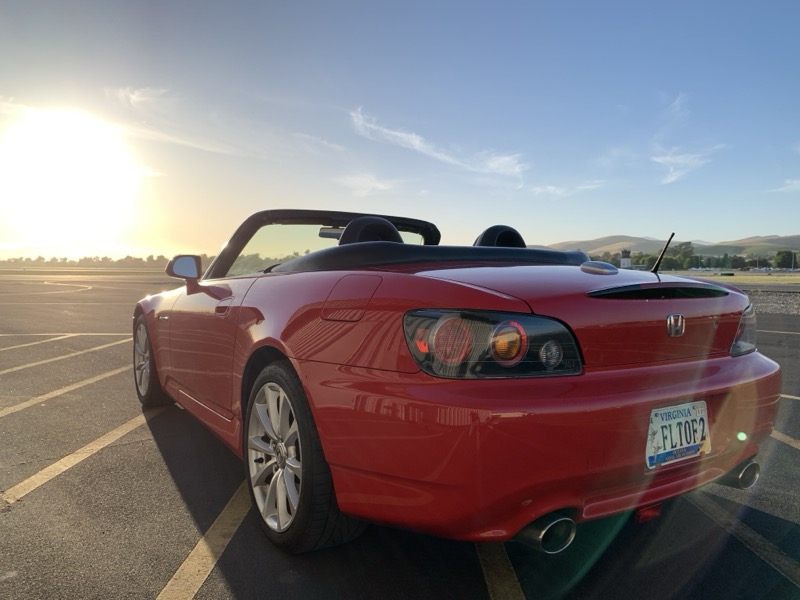
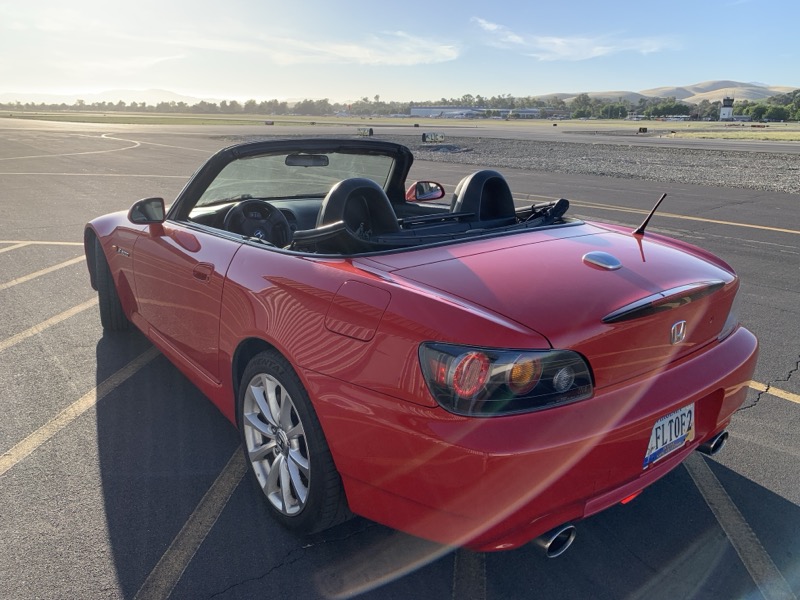
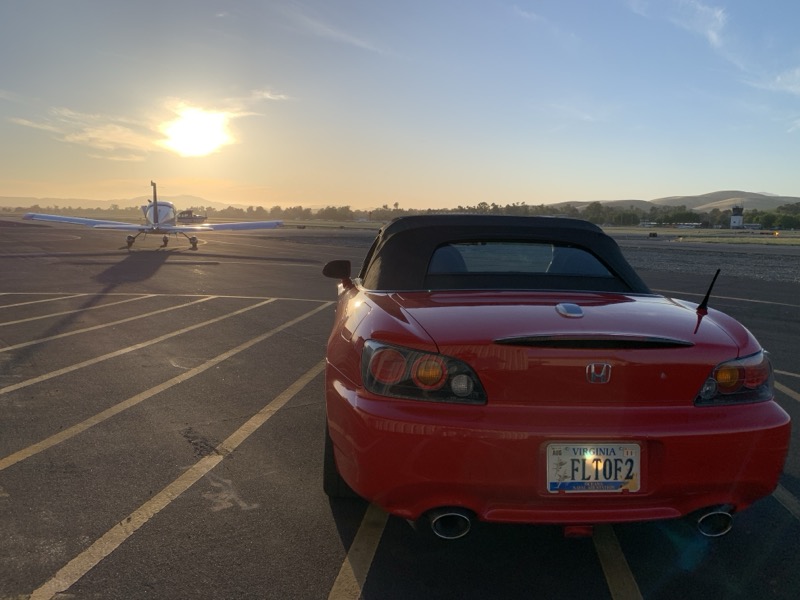
I walked out of the dealership that day with the keys to a brand-new, red-and-black roadster. My first Virginia license plate was a tribute to a classic aviation phrase: "flight of two"—two aircraft flying in formation. I chose the Oceana Naval Air Station design, featuring a pair of F-14 Tomcats side-by-side, and registered the car as "FLTOF2". For twenty years, that’s exactly what it was: a synchronized flight between man and machine. Taking the final photos the other day, I tracked down that original plate and mounted it back to the rear bumper one last time. It felt only right.
Driving it off the lot as my first-ever new car was a revelation. Shifting through the gears and rolling along the Maryland countryside felt nothing short of magical. But the honeymoon period of perfection was short-lived. On my way to cross the Potomac River via White's Ferry, I took a wrong turn and found myself on a dusty, unpaved gravel road. As the stones pinged against the underbody and dust kicked up into the pristine wheel wells, a wave of guilt washed over me. I was convinced I was ruining my brand-new machine. Had I only known then that I would keep this piece of engineering for the next twenty years, I might have felt less guilty about a little Maryland dust.
Over the next four years, that chassis became a fixture of the American East Coast. It journeyed north to New England, navigated the concrete canyons of New York City, and tore down south into the mountain air of North Carolina. It stood in the shadow of history on the National Mall, parked beneath the glass walls of the National Air & Space Museum, and regularly tore up the sweeping curves of the George Washington Parkway.
Chapter IIThe Transatlantic Leap
Then came the Fall of 2010. I accepted a new career opportunity in Munich, Germany, and was instantly confronted with a profound, impractical dilemma. Do I take a rear-wheel-drive, high-revving Japanese roadster to a country notorious for its brutal winter weather and the most unforgiving vehicle safety standards on the planet? Or do I, the German-born son of an American father, buy a BMW and leave a piece of my adopted Japanese identity behind? Logistically, I'd also have to rent an apartment with a garage, a pricier and more difficult thing to find in Bavaria.
I chose to take the leap.
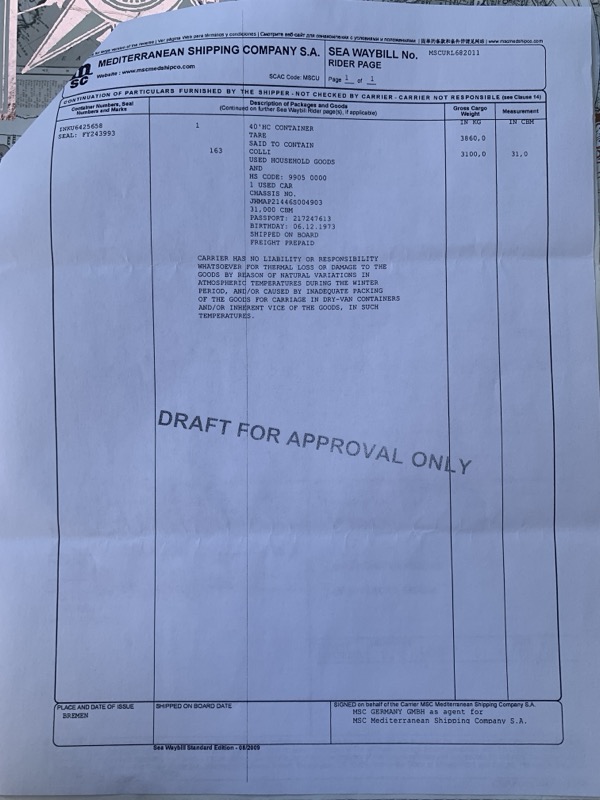
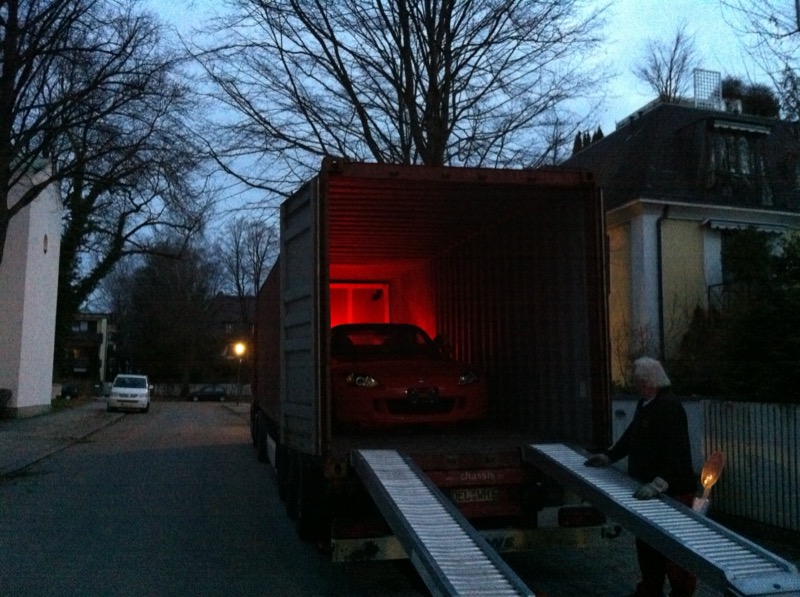
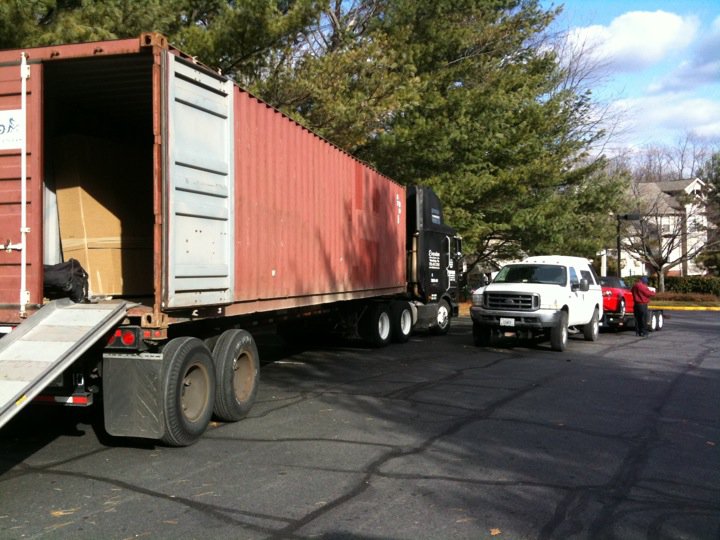
I paid an extra $1,400 out of pocket to upgrade my relocation package from a standard 20-foot shipping container to a 40-foot fortress. As the container doors latched shut and the ship departed the American East coast, I was gripped by the distinct, anxious certainty that the vessel would encounter a catastrophic Atlantic storm, and that my S2000 would become one of those rare, tragic statistics resting at the bottom of the sea.
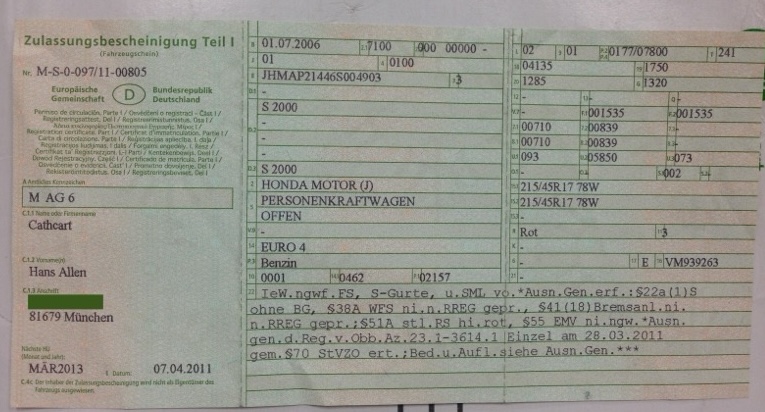
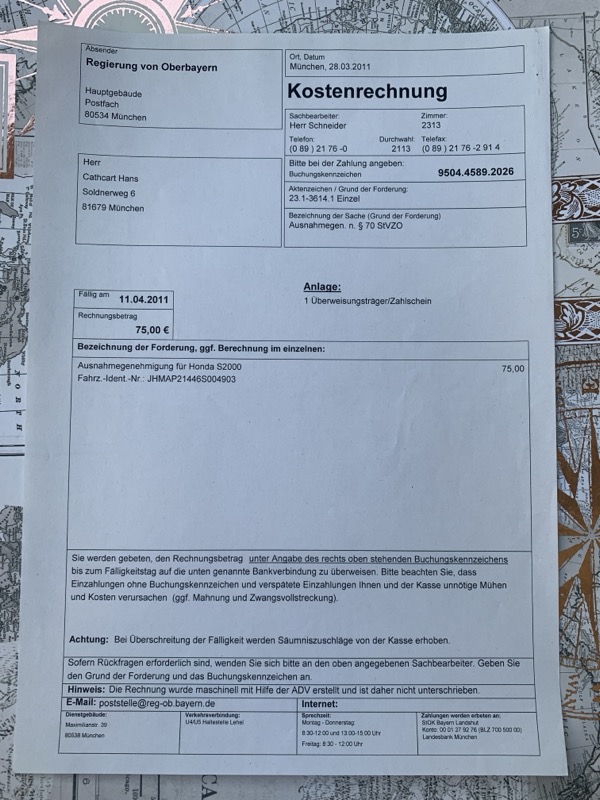
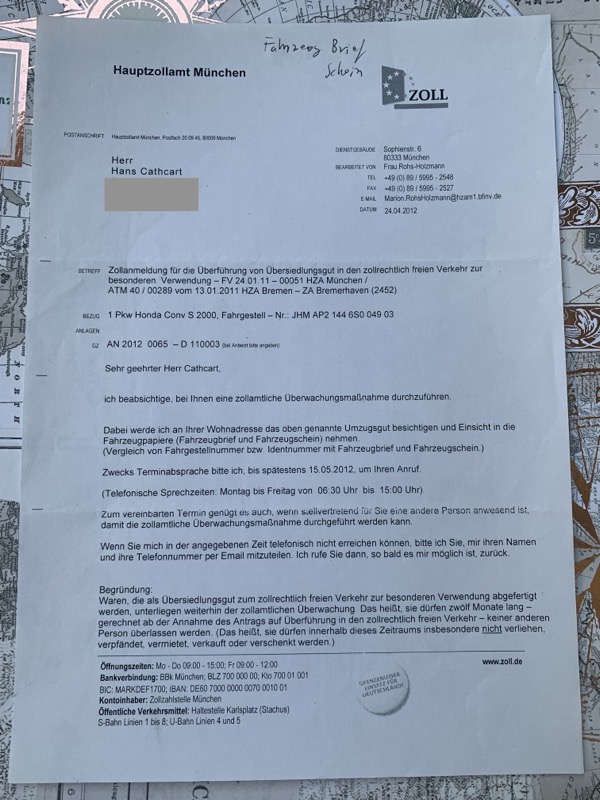
But the ship held. The container arrived on European soil. Yet, as I would quickly learn, surviving a transatlantic voyage was only half the battle. Convincing the strict bureaucrats of the Bavarian government to actually let me register and drive an American-spec sports car on German roads was an entirely different conflict altogether.
Chapter IIIThe Bureaucratic Gauntlet and the Stamped "e"
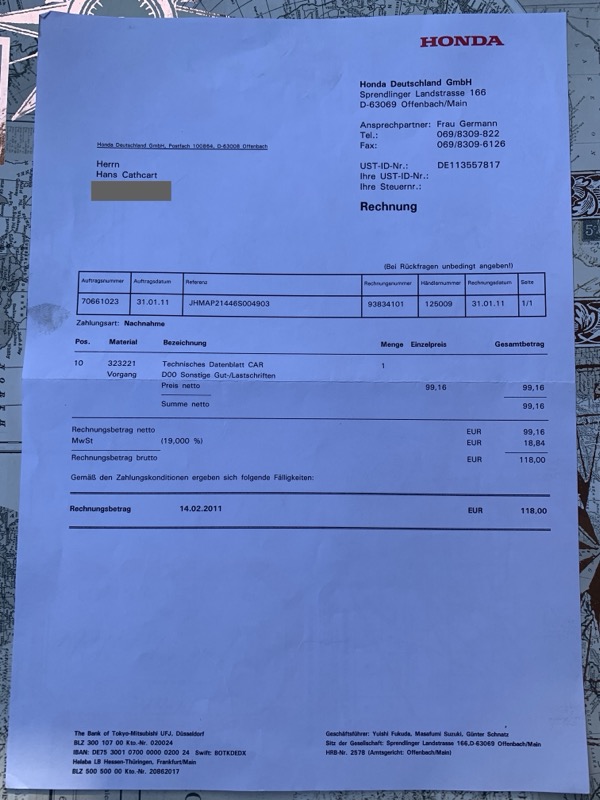
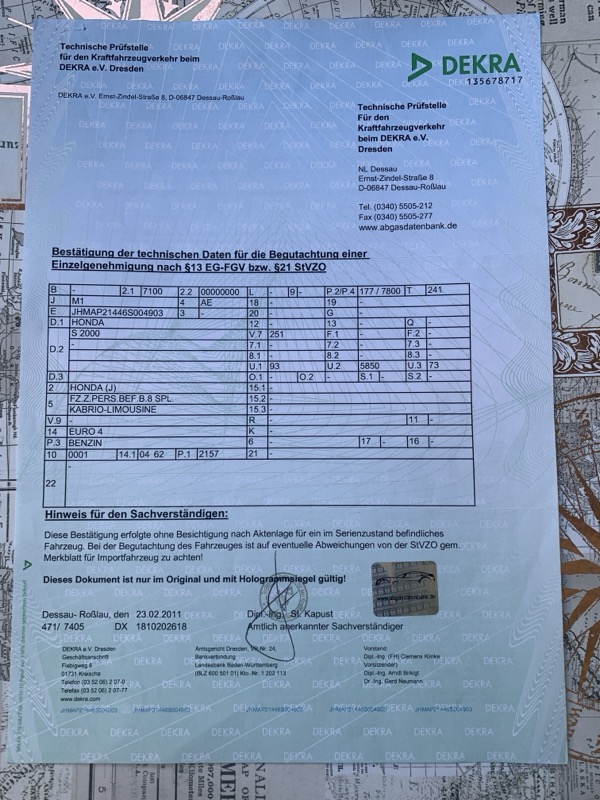
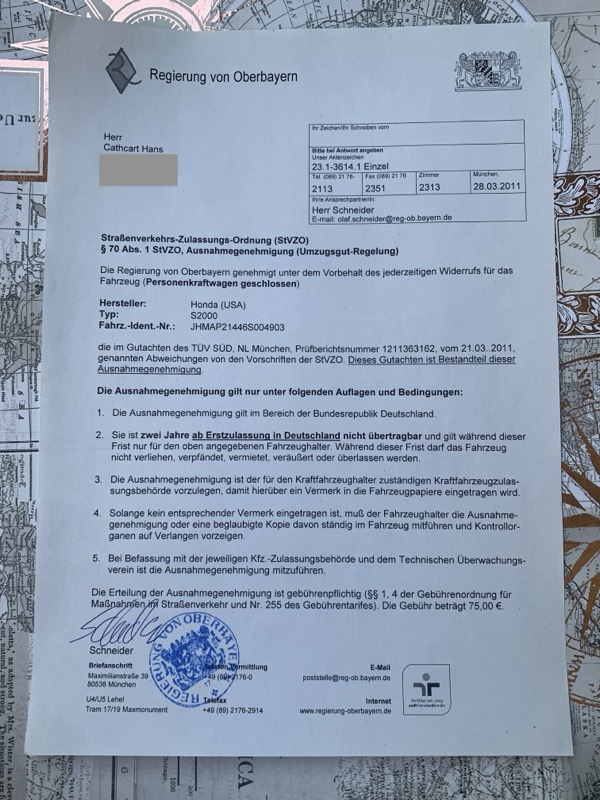
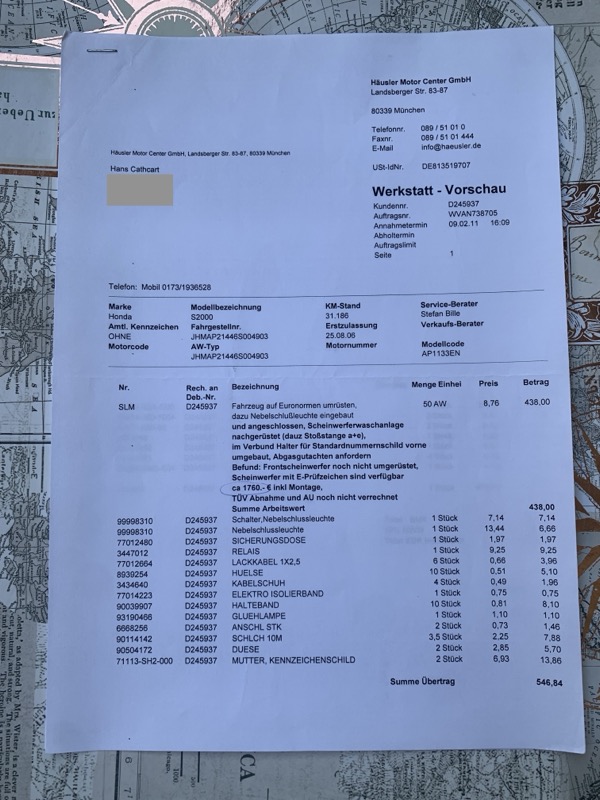
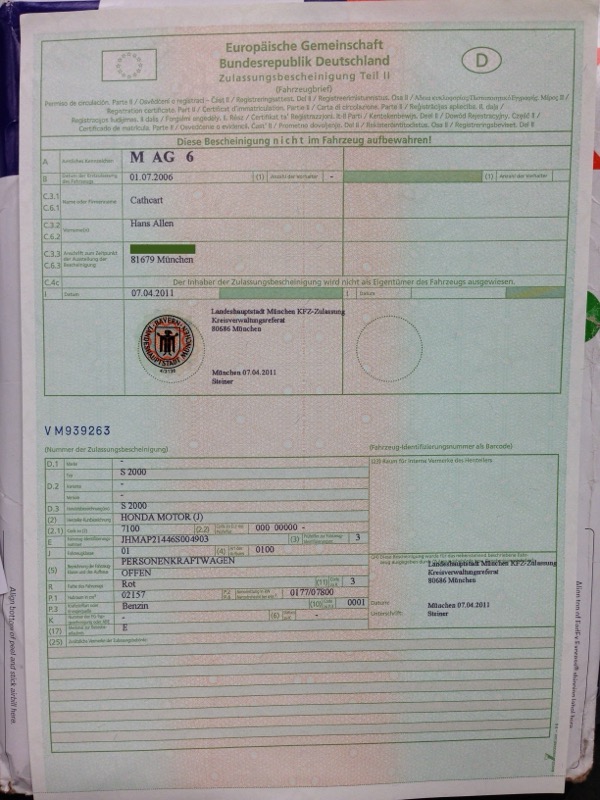
Dealing with German bureaucrats is an exercise in encountering people who are surprisingly friendly, yet entirely uncompromising. Navigating their labyrinth required retreating to the local Honda dealership, mobilizing a paper trail directly from Honda corporate to verify the car's pedigree, and proving indisputable ownership.
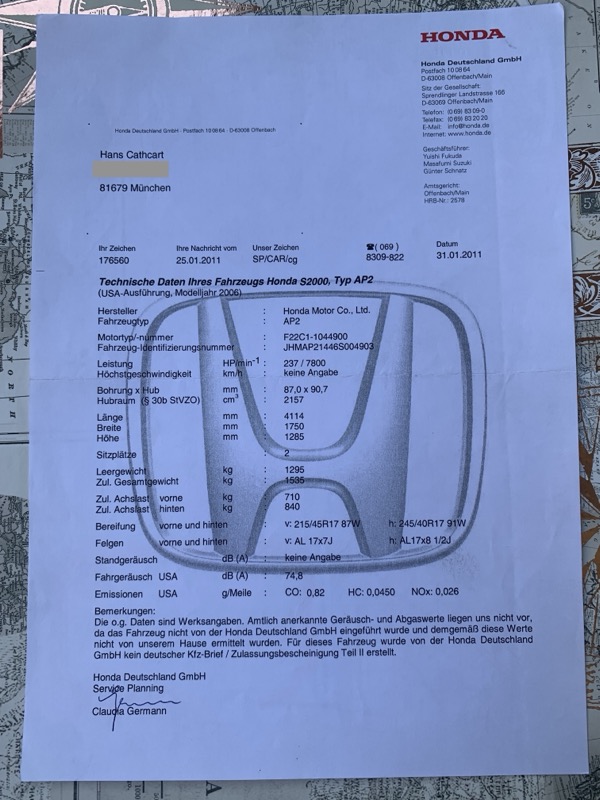
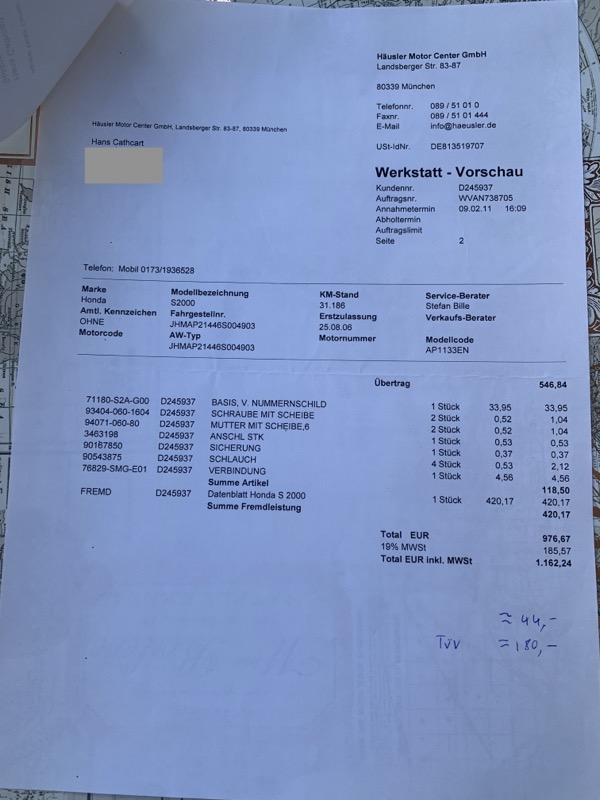
Then came the physical modifications. Before the move, the S2000 community had already informed me that european regulations mandated a rear fog light, a feature entirely absent from the clean lines of the American rear bumper. Fortunately, Honda Häusler Automobile executed the installation with a level of precision that made the new light look as though it had been integrated into the original Suzuka design.
But where the bureaucracy descended into pure absurdity was the headlights.
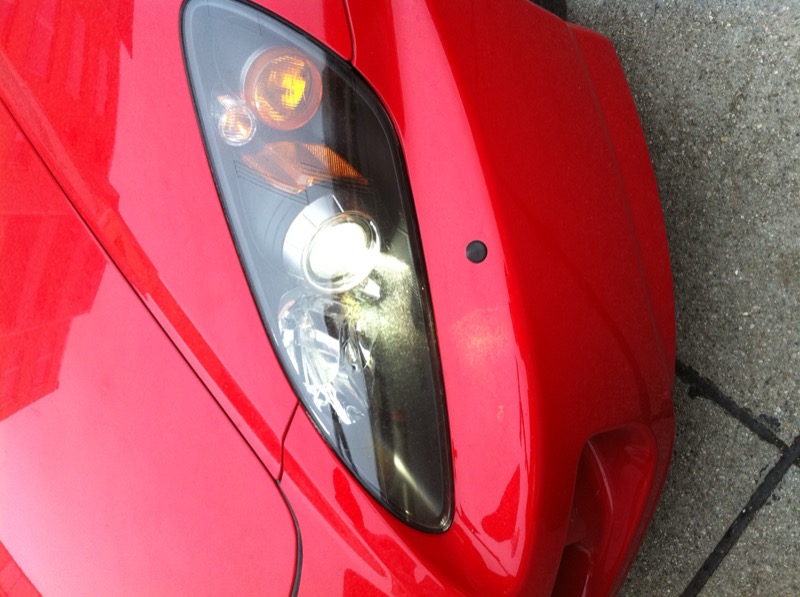
The inspection officers halted the registration because my American-spec housings were missing—get ready for it—a tiny, imprinted letter "e" stamped into the plastic to signify European conformity. (There's more too it, feel free to research "asymmetric beam cutoff" and European-spec (EDM) headlight housings.) I balked at the sheer rigidity of the demand. I told them there had to be a better way forward than discarding a pair of perfectly good, flawless factory headlights just to replace them with seemingly identical housings that possessed a different stamp.
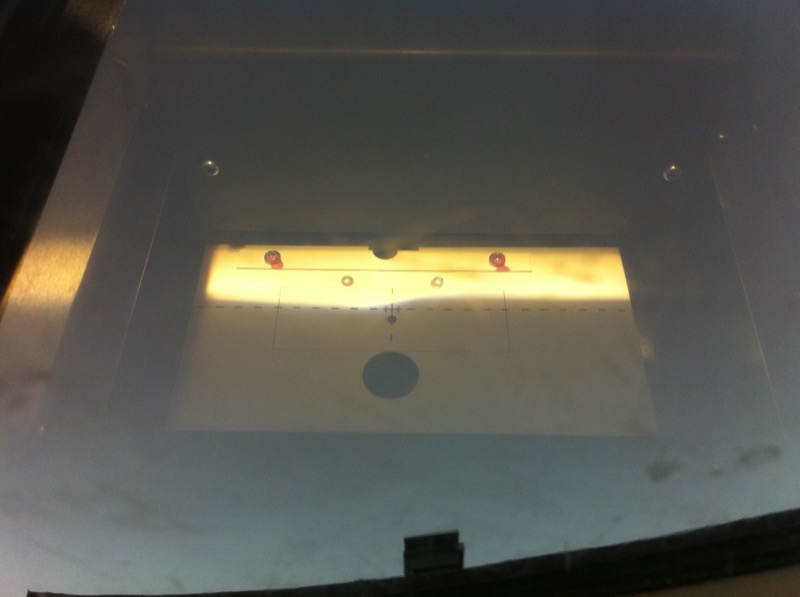
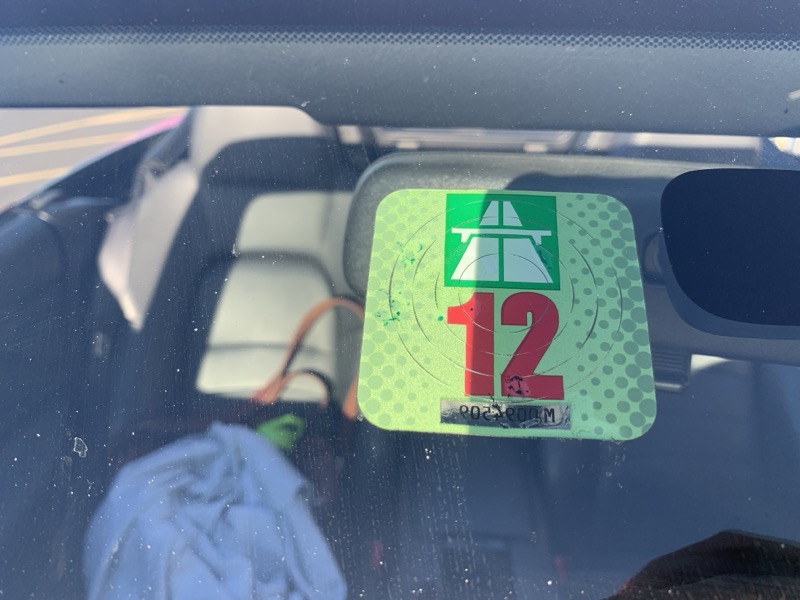
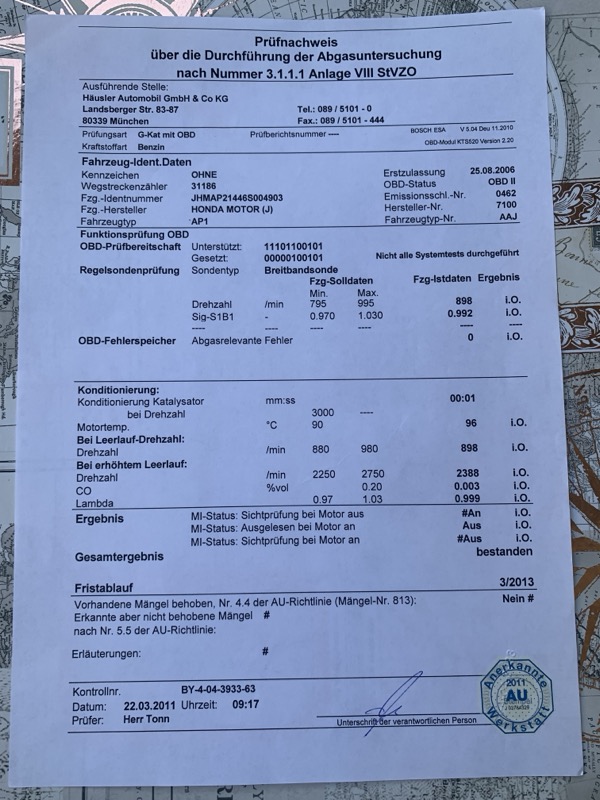
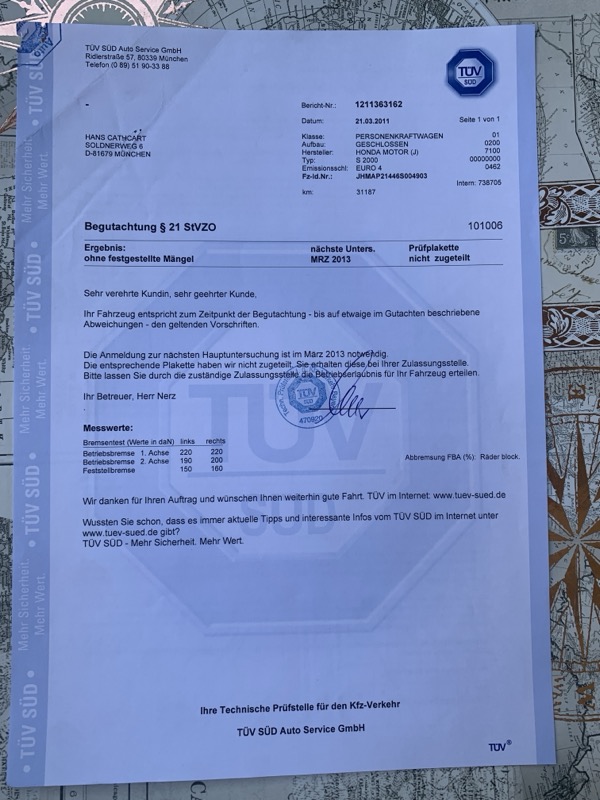
They finally relented, granting me passage to an official TÜV inspection station for an analytical compromise. I had to scientifically prove that my American high beams would not blind an oncoming Porsche and cause it to veer violently off the road. The high beams were fine. The paperwork was stamped, and I was finally handed my coveted "M-" Munich license plate, alongside the car's very first Autobahn Plakette.
Game on.
Chapter IVThe Laws of the Left Lane
Unleashing a roadster in Germany is a lesson in contradiction. Driving on the Autobahn is, first and foremost, a grueling exercise in patience. Near the cities, the illusion of limitless speed vanishes; you rarely exceed 120 km/h, and there is absolutely no American-style "5 to 10 mph wiggle room" with the speed cameras. You learn to drive exactingly. You learn the golden rules of the territory: never cruise in the left lane (yeah, I did that early on), constantly scan your mirrors for the true lunatics approaching from the horizon at over 200 km/h (a club I later joined), and never, never pass on the right.
Except once.
Although there are many stories, two distinct moments from that era remain permanently etched into the chassis' history. The first occurred on an unusually wide, sweeping three-lane stretch of tarmac between Nürnberg and München (the A9). I came over the crest of a hill at 220 km/h in the center lane, only to find a slow-moving Audi stubbornly 'parked' in the far-left lane of an otherwise entirely empty highway. I say 'parked' because when the other car is driving 100 km/h and you're doing 220, it's like driving towards a wall at 120. With closing speeds that high, a significant deceleration and a quick pass in the very right lane spared me an expensive brake job.
I rolled back into my apartment garage, and parked next to my neighbor's BMW 3-Series. Yes, Munich is the heart of BMW-land, and she worked there as an engineer. But despite our different brand loyalties, my Suzuka-built Honda received respect.
The second memory is one of pure, adrenaline-fueled survival. Driving south of Stuttgart on a notoriously crash-prone, winding stretch of the A8, my AP2 barely avoided a total catastrophe. Semi-truck drivers in Europe drive dangerously close together, a terrifying habit I have never fully understood.
I was rolling down the center lane at a reasonable speed, passing one semi after another, when a looming sense of danger hit me as the highway began to climb a grade. Perhaps it was because I was still cruising in sixth gear. ;-)
Things didn't seem right, a premonition perhaps. Instinct took over. As a sensible American driver I wanted more distance from the trucks, but in Germany you're taught to stay right. I broke the rules and moved to the wide-open left lane. Then, I did what any experienced S2000 driver would do—I accelerated, just in case some crazy Mercedes was closing in from behind me.
That tactical acceleration saved my life. I had just cleared the point of potential conflict when a truck driver behind me smashed into the back of another semi.
Immediately, I saw particles shatter in my rearview mirror—an explosion of wooden splinters that would have pierced straight through my fabric soft-top had I been just two seconds slower. I was shell-shocked for the next hour of driving. The F22C1 hadn't just given me joy that day; its responsiveness had kept me alive.
Chapter VFlying on Pavement: Switzerland and the Bodensee
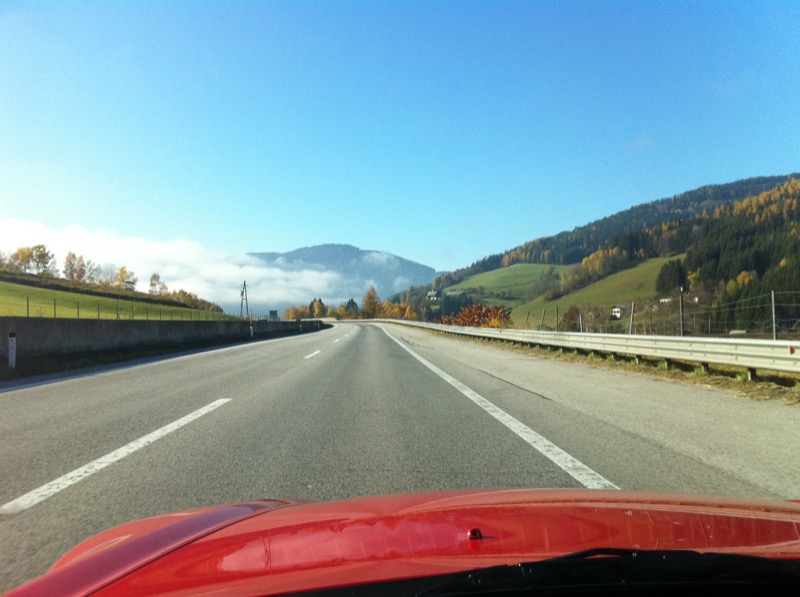
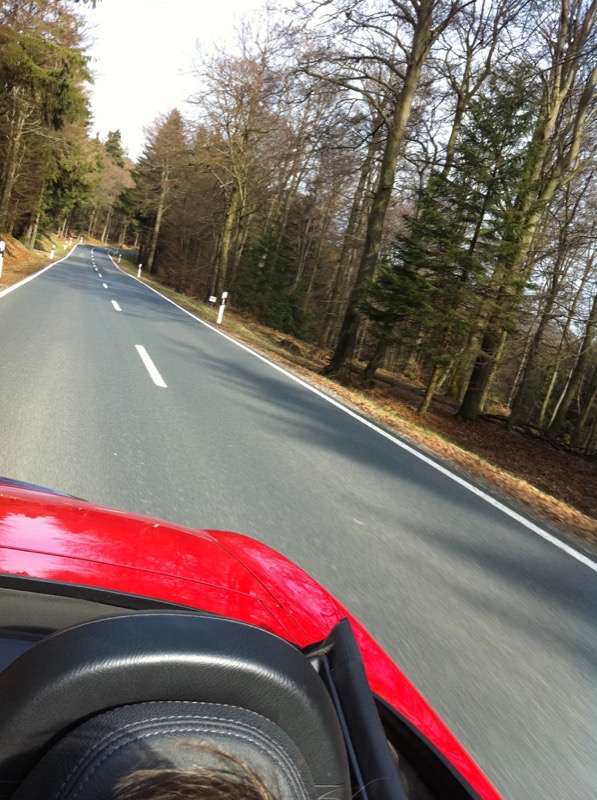
Fortunately, not all drives on the Autobahn involved that level of terror, and I can happily say I enjoyed two years of using the S2000 to its fullest potential. A friend recently asked me what my absolute favorite memory of driving my car was, and while it's incredibly hard to pick a single moment, driving on the near-perfect Swiss autobahns during a trip to Zurich with the Bodensee (Lake Constance) on one side and the Alps on the other was a thing of absolute beauty. It was easy to see because I had the top down.
Their speed limits top out at 120 or 130 km/h, but I doubt the average American driver can even imagine how smooth roads can truly be. The typically tight, communicative double-wishbone suspensions on our S2000s mean we feel the texture of the road like few other cars. But on this particular stretch of Swiss pavement, just cruising at the speed limit, the feedback completely changed. It felt like the car was floating, like we were airborne, and I wasn't even exceeding 220 km/h.
Chapter VITouching the Limits: 243 km/h
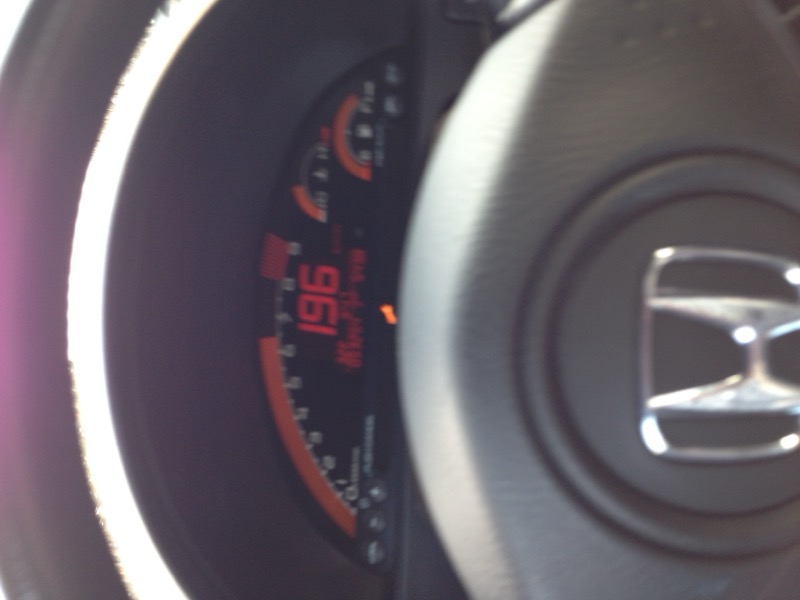
Speaking of which, since you're all wondering, the absolute top speed my chassis has ever hit is 243 km/h (151 mph), achieved with the top up. It wasn't an easy feat getting it there. The A8 from München to Stuttgart is notoriously bendy, and there are countless zones where the speed limits drop abruptly down to 100 km/h due to noise-abatement regulations (a concept fellow airplane pilots will deeply appreciate).
However, there is a glorious three-lane stretch just east of the Stuttgart airport that features what feels like a 2% downslope. Coming over the crest of that hill with everything my little red ride could muster, I managed to push the engine right near redline. I finally had to back off as the rear end started floating. Remember, I chose the connection to space, so I had no wing to anchor me. I was foolish, I'm sorry mom, but you haven't truly lived until you've felt that close to certain death.
Top-down, with the tonneau cover, I think the absolute limit of my courage was 210 km/h (130 mph). At those velocities, even with the windows rolled all the way up, the wind shear is so terrifyingly loud and the sudden, visceral realization that you don't possess a full roll cage keeps your foot from stepping down any further.
Chapter VIIThe Ultimate Alpine Pack Mule
Lastly, although I occasionally used the car for commuting, it was first and foremost a good-weather grand road-tripper. Over those European years, it made its mark across Germany, Austria, Switzerland, Liechtenstein, and Italy.
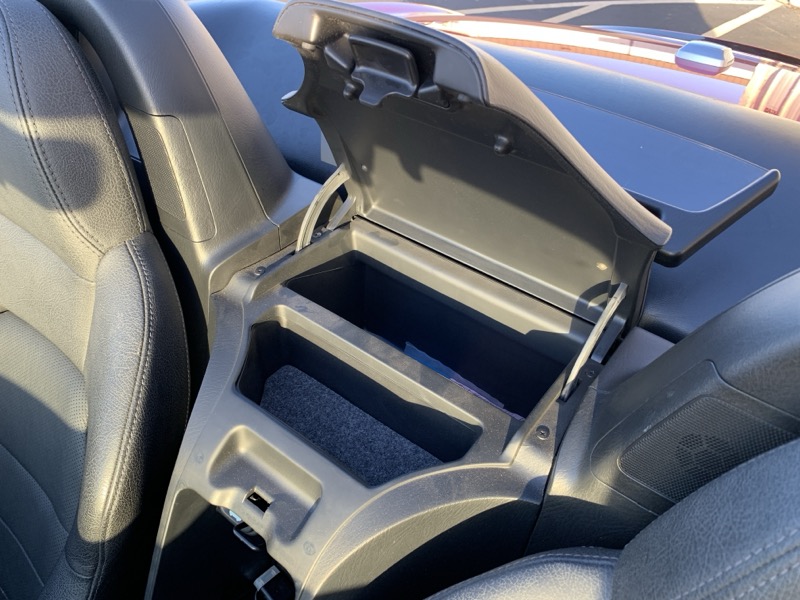
The S2000 is notoriously starved for cargo space, but where there is an enthusiast's will, there is a way. I managed to wedge my snowboard into the passenger seat, cram a suitcase into the trunk, and throw a set of snow chains on top of it to go hit the winter slopes in Passo del Tonale. Good times.
Chapter VIIIThe Return Transit through the Golden Gate
The unique compromise I had struck with the German authorities over my missing headlight stamps came with a strict condition: I was legally forbidden from ever selling the car while living within the borders of Germany. That was perfectly fine by me. But it meant that when the time inevitably came for my return to the United States, the car would have to take to the sea once more.
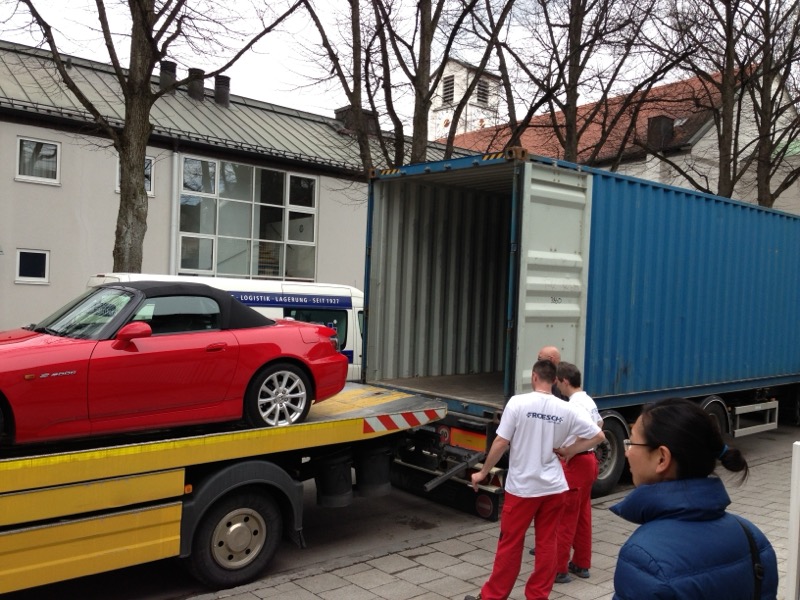
The process repeated itself. The car was driven back into the safety of an upsized 40-foot container, latched into the darkness of the steel box, and sent on its way.
While its original journey from Virginia had been a relatively straight, transatlantic shot, this time the AP2 was bound for California. I traced its progress on a commercial ship-tracking website, watching the journey unfold across multiple legs. It went aboard at least two different massive container vessels, making tactical logistics stops in Rotterdam and a port along the Iberian Peninsula before setting out across the open Atlantic.
It eventually found its way back to the warm waters of the Caribbean Sea (a region this car has now visited more times than its owner), and headed back toward the locks of the Panama Canal. For those keeping count at home, that marks two distinct transits through the canal, once in each direction. Not many S2000s have transited the Panama Canal twice.
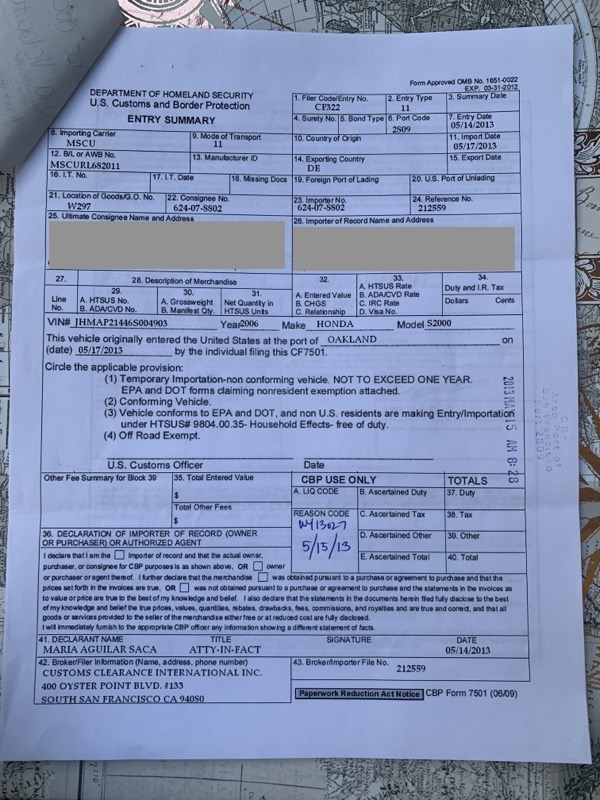
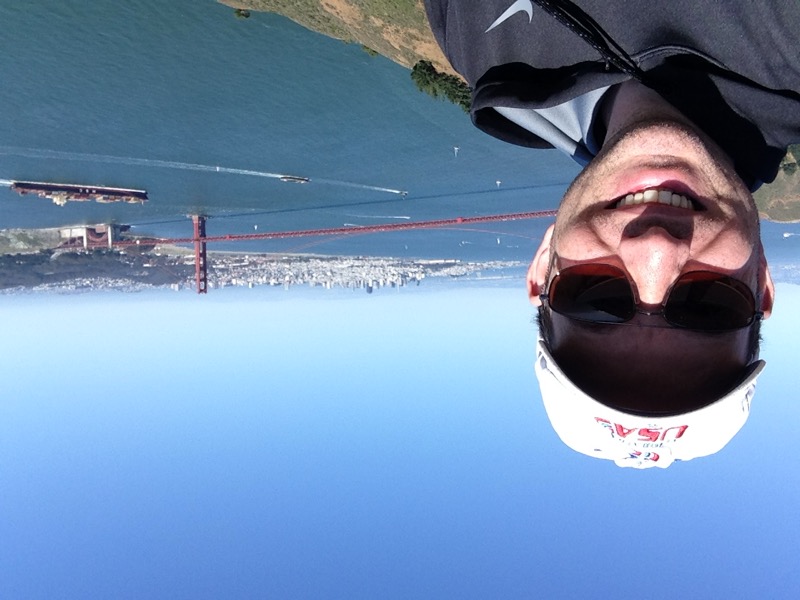
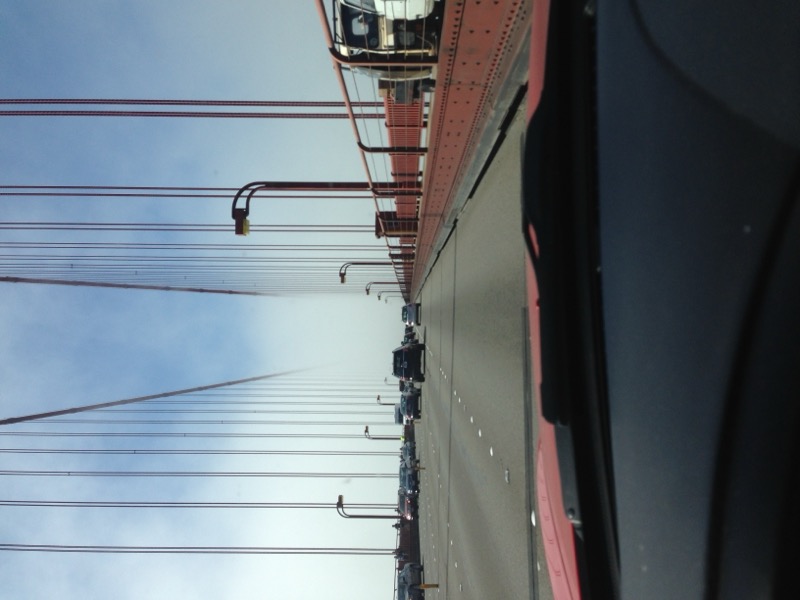
As the ship cleared the canal and began its northern trek up the Pacific, I eagerly awaited the return of my mechanical companion. The anticipation was so high that on the day of its arrival, I drove out to the Marin Headlands and stood on the cliffs, watching from above as the massive container ship cut through the water, sailed directly beneath the spans of the Golden Gate Bridge, and maneuvered over to the Port of Oakland. In the years that followed, I would drive this very car across that iconic suspension bridge hundreds of times during my commutes into San Francisco.
My AP2 had finally made it back onto terra firma on the American West Coast. I imagined the crane operator playing Iko Iko in his cab in tribute to the opening scene of Rain Man, as they unloaded the container from the ship. From that point on, I assumed the rest of our journey together would simply be a quiet accumulation of routine miles on the odometer.
Or so I thought.
The Illusion of Simplicity and the Sonoma County Nightmare
I should start by clarifying that while I am a passionate driver and an enthusiast, I am not a "car guy." I don't change my own oil, although I thoroughly understand the concept: drain the old oil, secure the drain bolt, add the fresh oil, close the filler cap, start the engine, and reset the oil life monitor. Hold onto that thought as a bit of foreshadowing; this shouldn't be a difficult concept for even a junior mechanic to grasp.
For the vast majority of our time together, all of my car's maintenance was done more or less on schedule. Occasionally I utilized Honda dealerships, but I usually relied on independent shops.
That said, as cars age (even machines as fundamentally well-engineered as our S2000s) they begin to require a bit of tender loving care as they approach the 80,000-mile mark. I probably waited too long on a valve adjustment, and the slotted brake rotors I installed were kind of silly. I did okay on some things and waited too long on others. But then I got insanely unlucky.
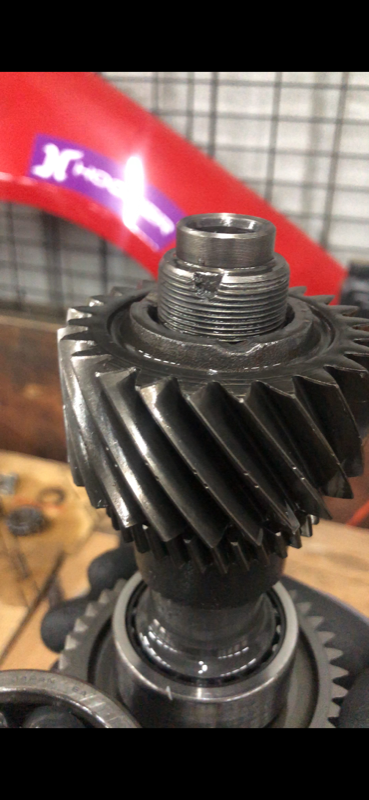
At first, it was just a standard clutch replacement. My regular mechanic wasn't entirely comfortable dropping the transmission on an S2000, so he gave me a recommendation to a specialty shop a few towns south in Sonoma County. Let's just say these guys didn't know the first thing about Hondas, and they weren't honest enough to admit it.
The botched clutch replacement spiraled into a transmission repair, which then led to a gear being catastrophically damaged during reassembly. The transmission repair technician wasn't careful. Thousands of dollars later, I found myself standing at a gas station in Fremont, California, filling up the tank and feeling utterly frustrated, wondering why my pride and joy was behaving so badly.
Chapter XThe Tribe at the Gas Station
The broader Honda community is amazing, but the S2000 community is something even more special. You all know the feeling—the mutual waves as we pass each other on the road, the spontaneous conversations at stoplights about tuning options. It is an incredible network. Because I don't race, and the closest my car has ever been to a track is the parking lot at Laguna Seca, I wasn't deeply looped into the NorCal Honda community at the time.
But the tribe looked out for me anyway.
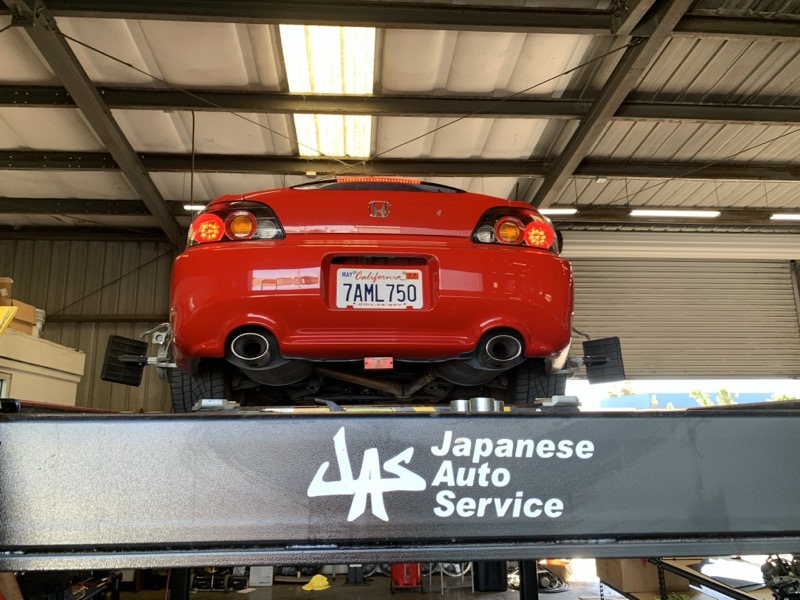
Another Honda driver—whose name I sadly can no longer recall—spotted me at that Fremont gas station and commented on my red-and-black ride. Frustrated and exhausted by the mechanical gremlins, I opened up to him about my troubles. Without hesitation, he told me I needed to go see Japanese Auto Service out in Tracy.
Now, from the East Bay, Tracy is a bit of a hike. But I desperately needed someone who could actually diagnose this car. A few days later, I found my way out to the Central Valley.
Chapter XIFinding a Master
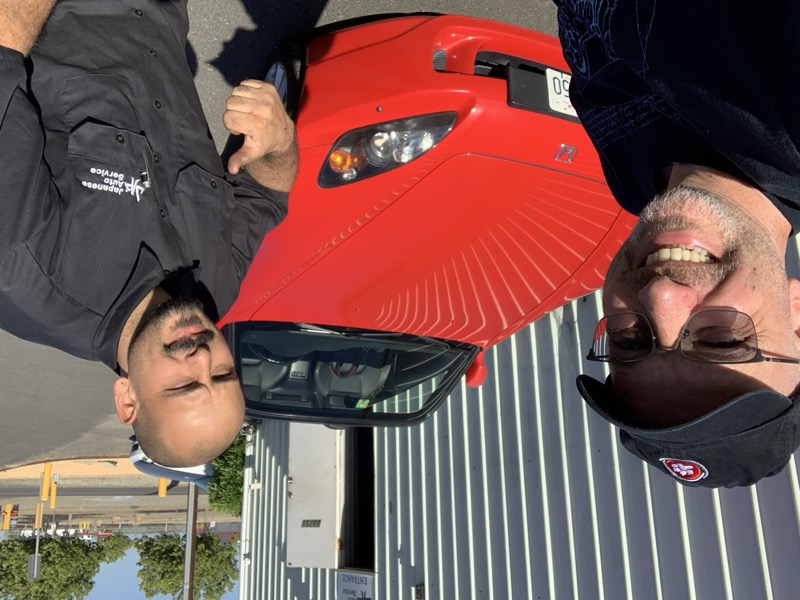
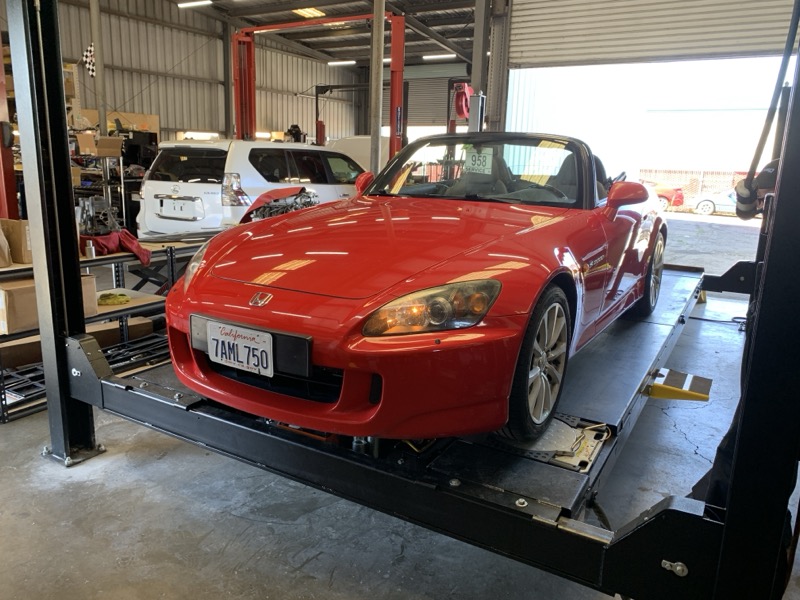
As profoundly unlucky as I had been with that shop in Sonoma County, the universe paid me back in spades the moment I pulled into Japanese Auto Service. I don't mean for this to sound like a commercial advertisement, but finding a master Honda technician of Eric Viera's caliber and professionalism is a rarity.
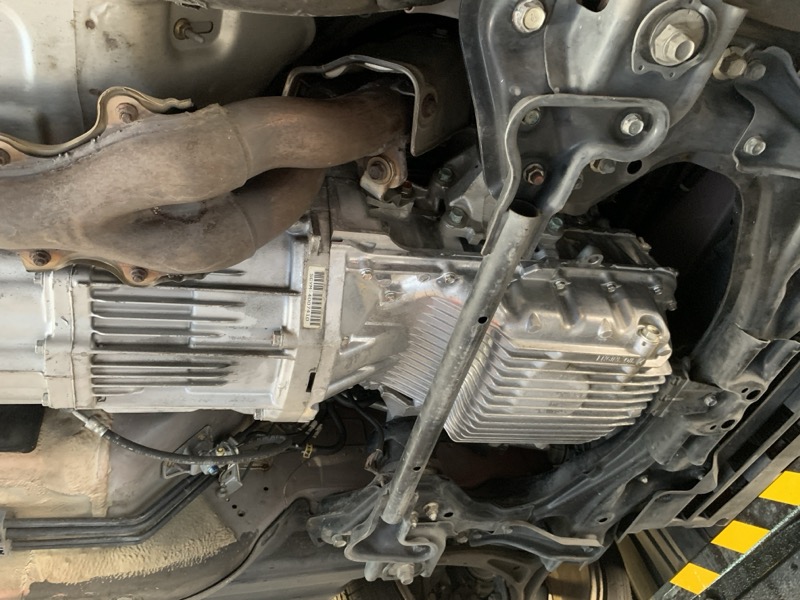
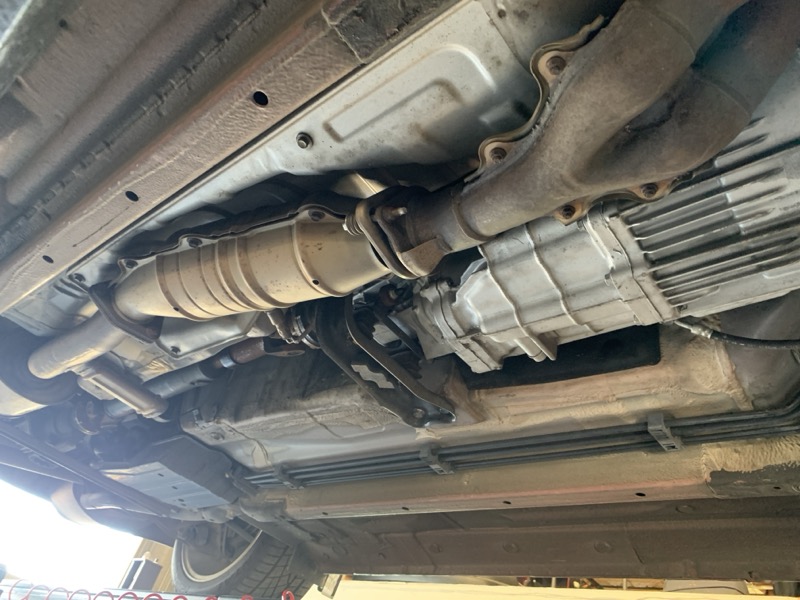
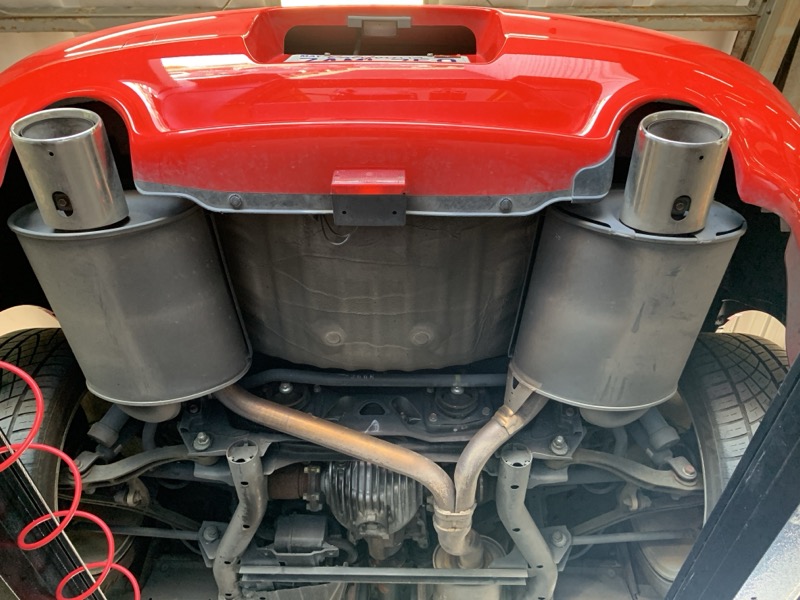
Eric meticulously took apart the mangled transmission, located the cracked gear left behind by the previous shop, fixed everything flawlessly, and had me back on the road with a proper new OEM clutch. In the process, he had to extract a very new, very expensive, and completely incompatible aftermarket unit that the Sonoma County shop had thrown at the car; it still sits in my garage as a reminder for me to do my due diligence.
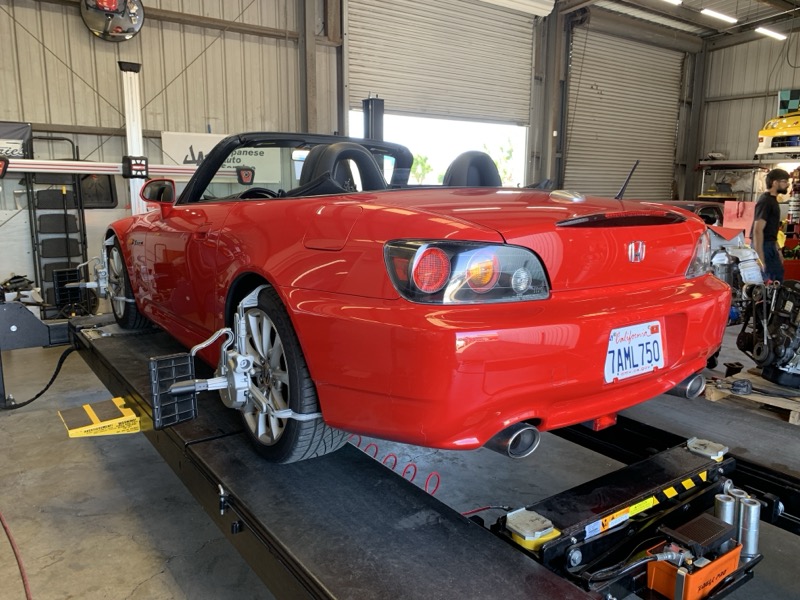
Before this narrative spins entirely into an exhaustive recounting of my maintenance receipts, I will fast-forward to say: this transmission rescue was only the prologue. Within the next year, my reliable, 117,000-mile, world-traveling 2006 S2000 would eventually undergo a complete heart transplant—emerging on the other side with one of the youngest, factory-fresh engines in the global S2000 fleet.
Chapter XIIA Death in the Family
My S2000 story almost ended in November of 2024. It started with a simple oil change. Remember what I said about changing the oil being a simple concept for a junior mechanic? Well, someone missed the memo. By the time Eric got his hands on the car, opened up the engine, and saw what was going on, my 18-year-old F22C1 engine block was toast. I still remember that phone call like it was yesterday—it felt like a death in the family. Best he could guess, the engine was run without oil.
I've considered pulling out my old International Relations degree and lobbying the International Criminal Court to amend the Rome Statute to add this as a crime against humanity. Fortunately, Eric helped me speed through the five stages of grief, and we got to work on saving the car.
Chapter XIIIThe Last Heart Donor?
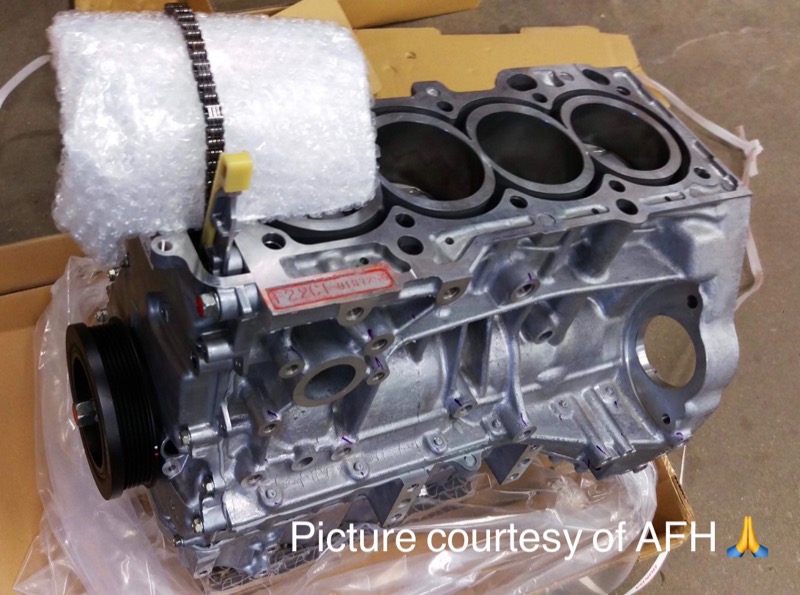
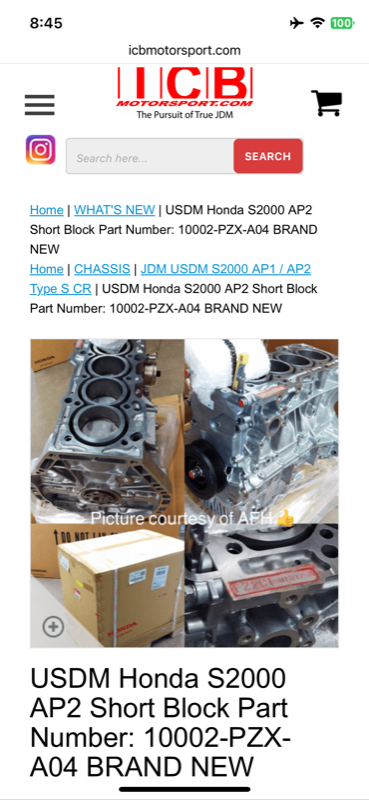
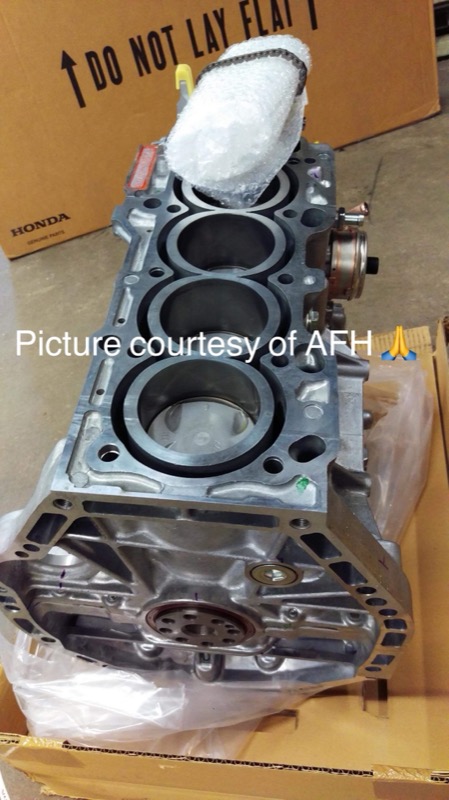
Now in Eric's shop, my S2k on figurative life support, we had to find a heart donor (a full 15 years after Honda built the last engine at the factory). I don't know how he did it, how many strings were pulled, but there was one last F22C1 short-block still for sale on ICB Motorsport. And we got it! We're pretty sure it was the last one available for sale in the US. Now, there may be a few crated engines sitting in collectors' garages, though this engine deserves to be driven. The likelihood this build is the last OEM install in the US, perhaps the world, is high—and at the very least, it's a very young heart.
For the uninitiated, the S2000's engine is special, and its legendary factory reliability is exactly why these blocks became so rare. For decades, brand-new assemblies just sat on dealer shelves gathering dust because nobody actually needed a replacement engine under warranty—they simply refused to die. Fast-forward to today, and these power plants are in such high demand that people routinely steal these cars just to rip the engines out (another crime against humanity).
When Eric unpacked the crate, I suspect it was a bit of a religious experience. In over a decade of being a Honda Master Technician, he'd never seen a brand-new F22C1 short-block, let alone the last one in the US. The artist got to work. But an engine needs more than a heartbeat; it needs to breathe. We had our pristine brand-new short-block, but now we needed a top-end, and finding an AP2 cylinder head was going to be its own quest.
Chapter XIVAn AP1 Head on an AP2 Short-block
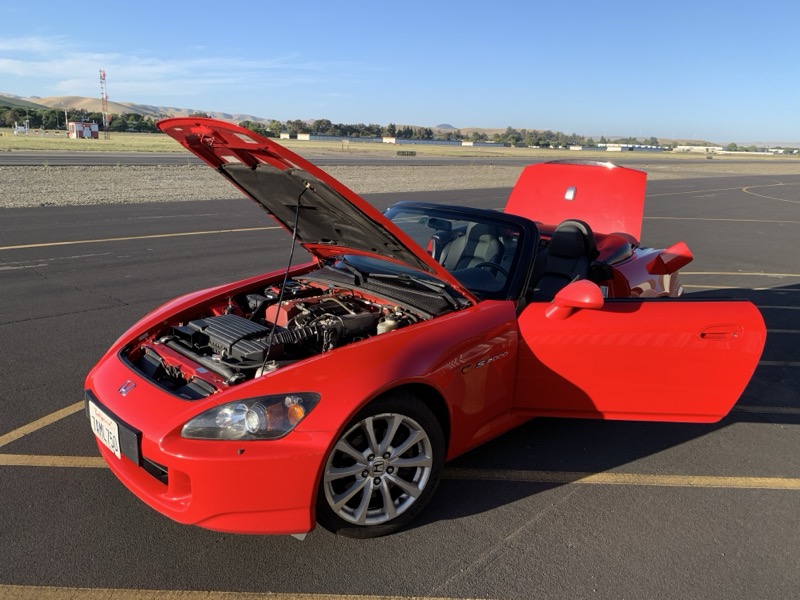
Once again, the community came to the rescue. Eric and his partner Dora frequent the NorCal racing circuits, and they know Miller Le—a legend in his own right. Miller builds heads like Stradivari builds violins. He had an AP1 top-end built for racing (Brian Crower stainless steel valves, a 3-angle valve job, new OEM valve guides, seals and keepers, with the head resurfaced and hot tanked). I'm the first to admit, I don't know what any of that means.
When Eric and Miller first told me about the hybrid build, I was a little concerned, but I trusted their judgment. In time, I've started to realize that this "AP1.5" setup, running on the stock ECU, is the ultimate choice for my mission. It feels absolutely fantastic.
Yet, somewhere out there, S2000 purists are likely shaking their heads, asking how a simple road-trip driver deserves an engine of this pedigree. Well, in a small way, I think I'm keeping Shigeru Uehara and Toshihiko Sawai's dream alive. With this new engine, I've already spent another 10,000 miles dropping the top, wringing out that high-revving masterpiece, engaging with the machine, and carving through the winding roads of Northern California.
The legend never ends.
CodaMy Looming Regret
It seems a little insane to get sentimental about machines, but I have yet to encounter an S2000 owner who doesn't love this car. I've also never met a former owner who doesn't regret selling theirs, and I regularly meet owners of modern high-performance sports cars who wish they had an S2000 in their garage as well. As a professional product manager, I can tell you that a business simply cannot buy this kind of lifelong loyalty with marketing spend or product gimmicks.
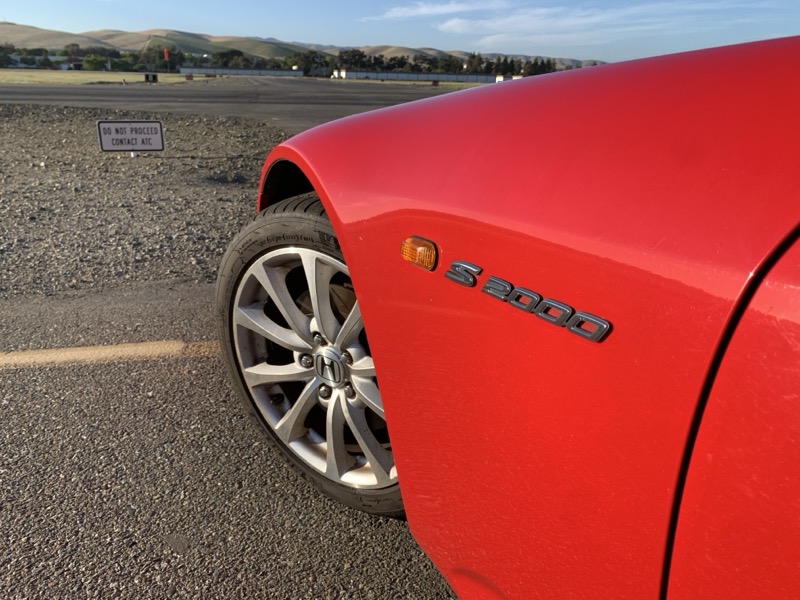
I recently read about Honda's first annual financial loss, and I feel a great deal of sympathy for the employees. I'm not waiting on a new S2000 to save the company—although a modern machine with that same spirit would be amazing. One annual loss is a blip on the radar, and Honda hasn't forgotten who they are. With the launch of their Honda Heritage Works program, the factory is getting serious about factory parts support for their classic sports platforms. They recognize the legacy they chaperone. Until that program fully scales to the S2000, owners like me, and mechanics like Eric and Miller, will keep honoring the legacy from the trenches.
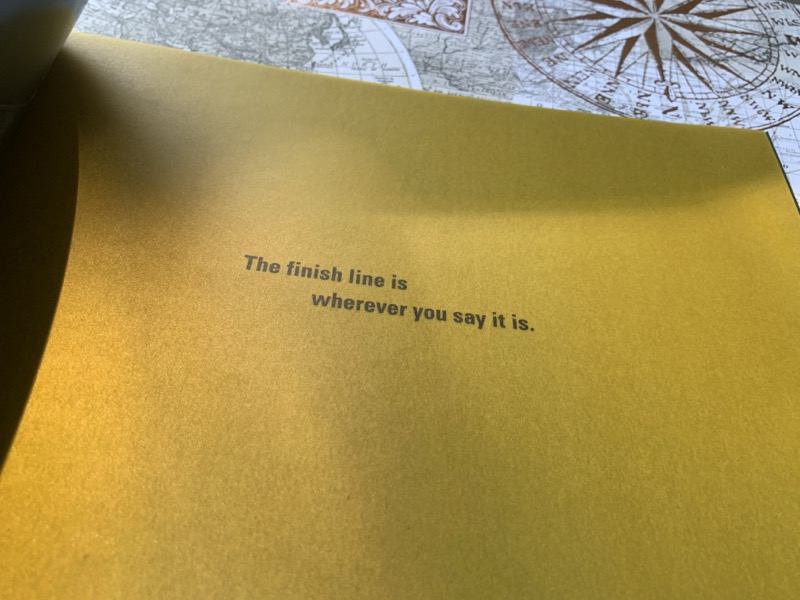
As I prepare to pass my S2000 to its next owner — in part because it's hard to fit a driver and two kids into my flight of two — I'm certain I'll feel the exact same phantom ache that every former owner feels. The looming regret is already here. At least it inspired this retrospective. But more than anything, it has been an absolute privilege to stand as a steward of this mechanical masterpiece for the last 20 years.
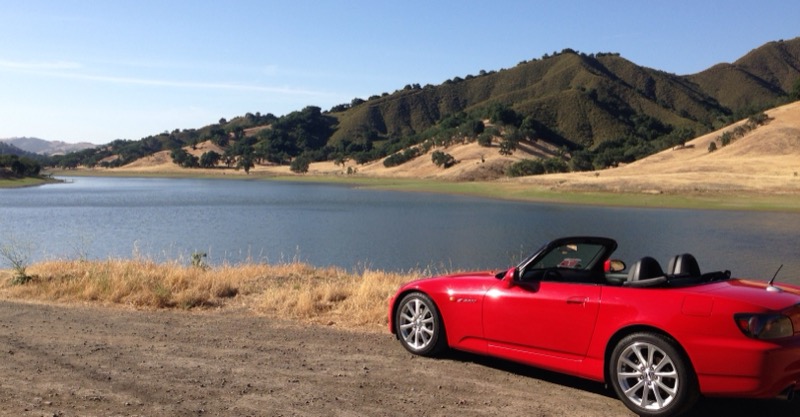
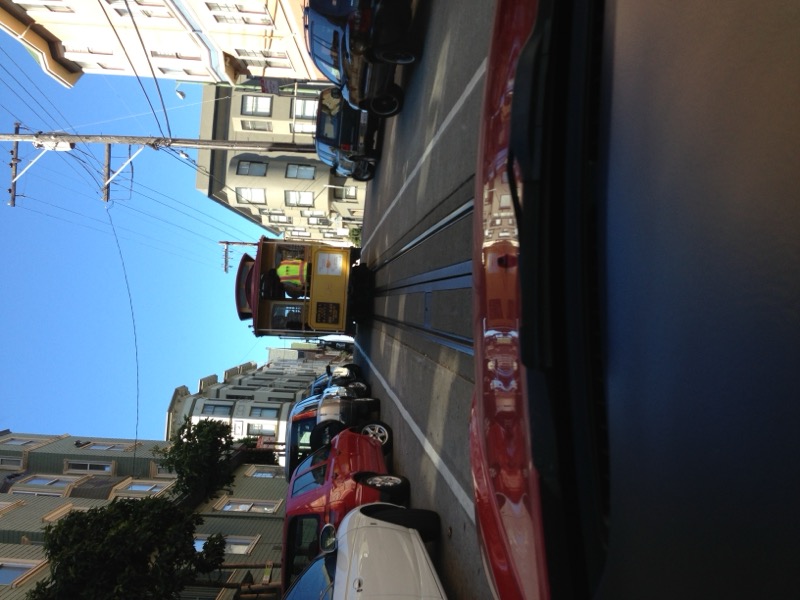
Here in California, my S2000 conquered the Pacific Coast Highway, Lombard Street, the Lake Tahoe shoreline, Donner Pass, and the lovely curves of the roads near Lake Berryessa. And I hope the next owner adds many more domestic, and maybe international, locations to its flight log.
Get in touch
I'd love feedback on what you thought of this retrospective, especially if you liked it. My "Panamax" S2000 already has a number of interested buyers, but if you'd like to post on Reddit or email me what you think it's worth, that'll make for interesting racetrack conversation.
Email: hans@oriensflight.com
Twenty Years in Photographs
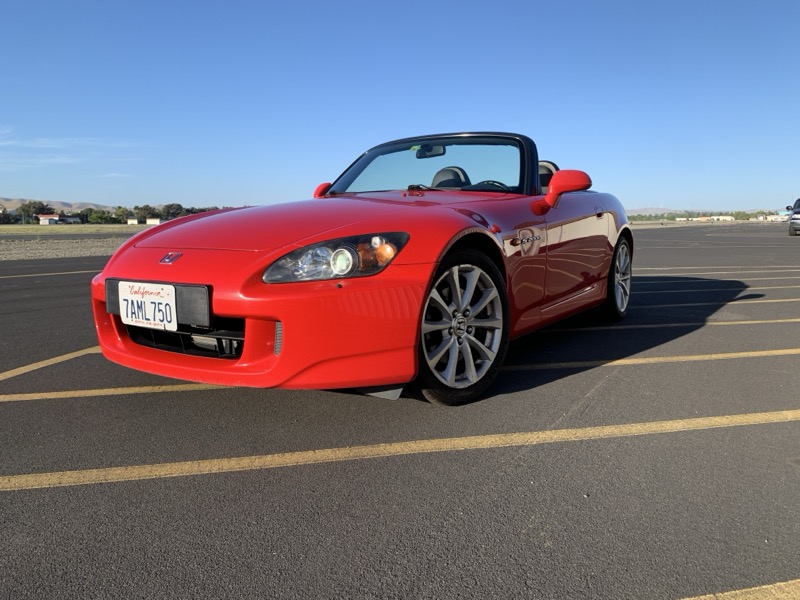
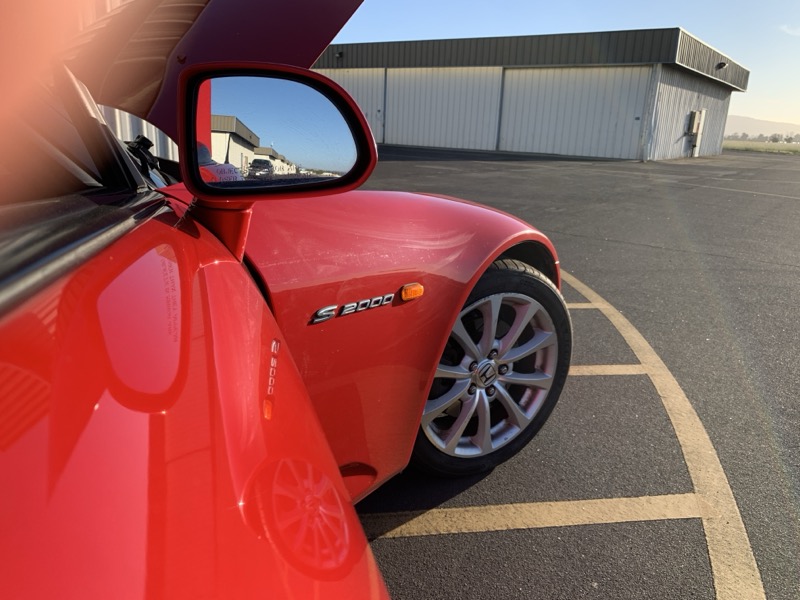
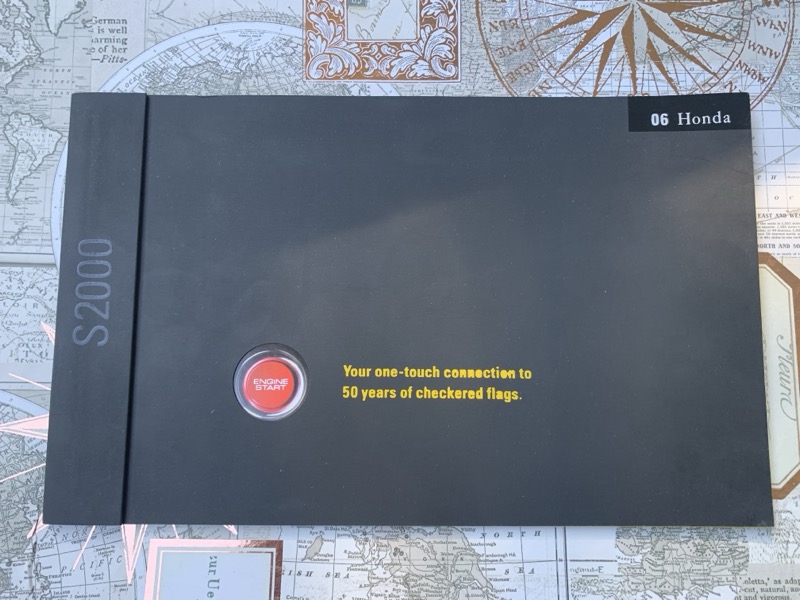
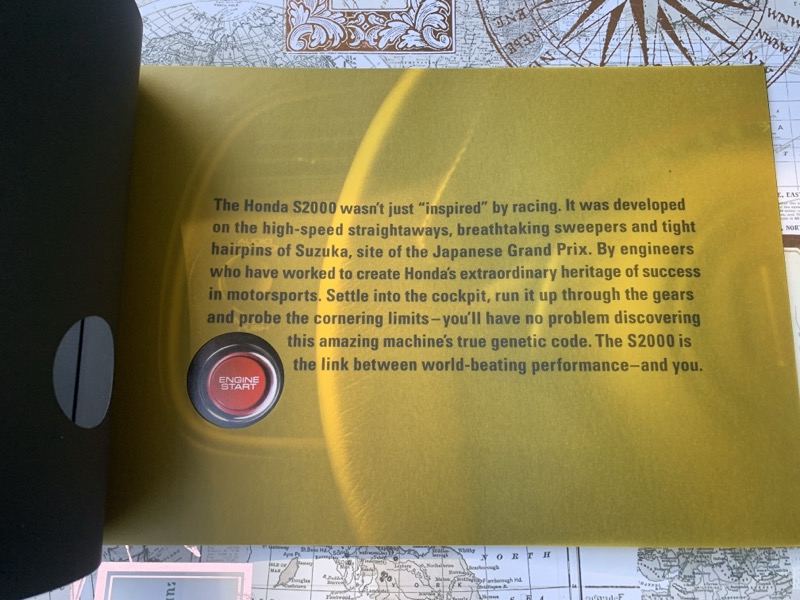
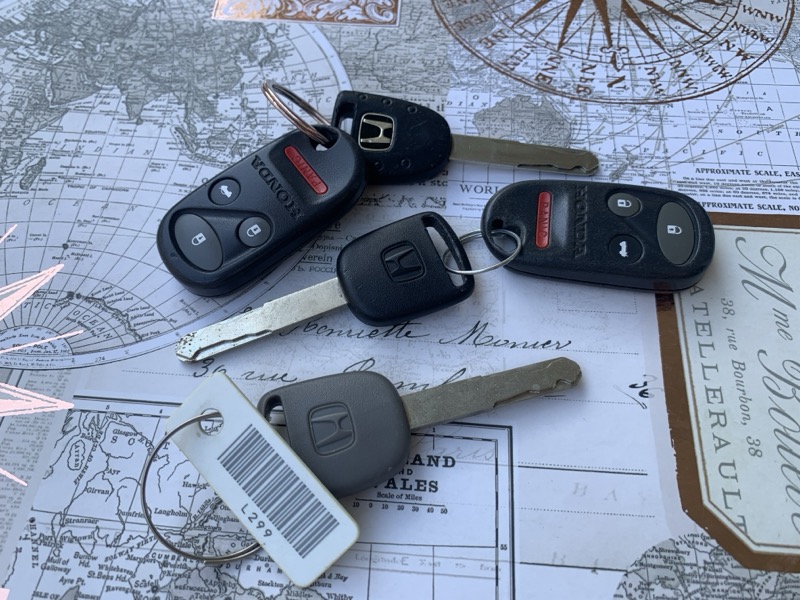
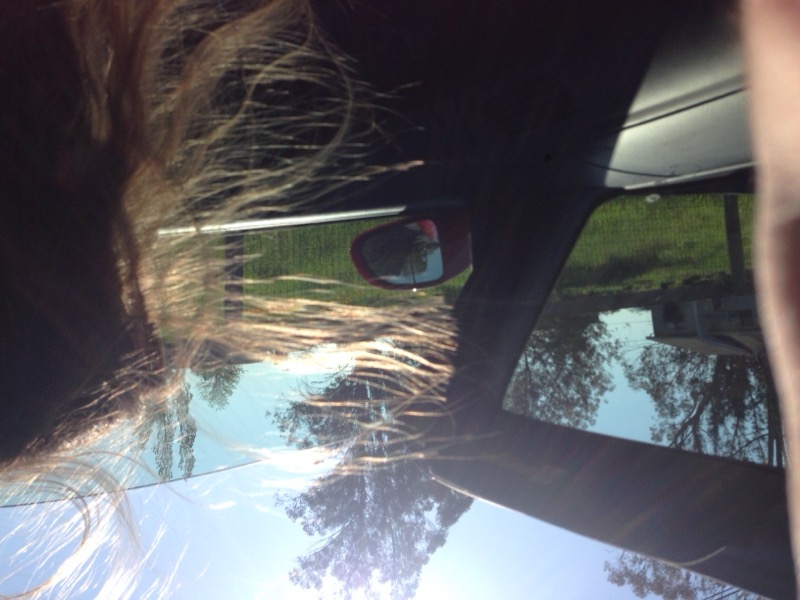
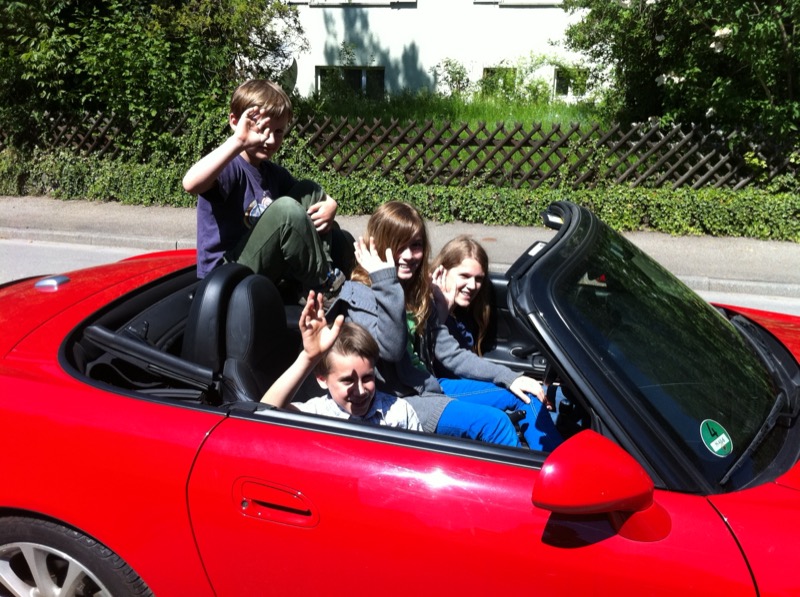
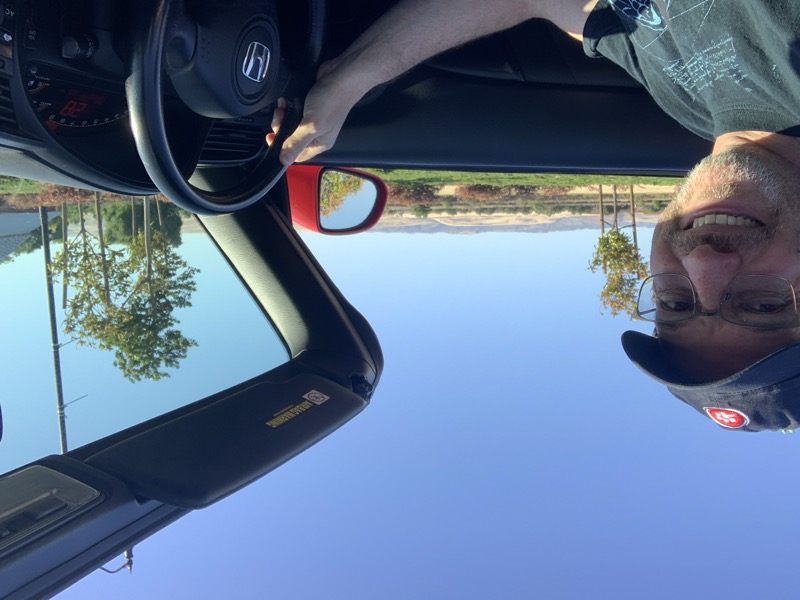
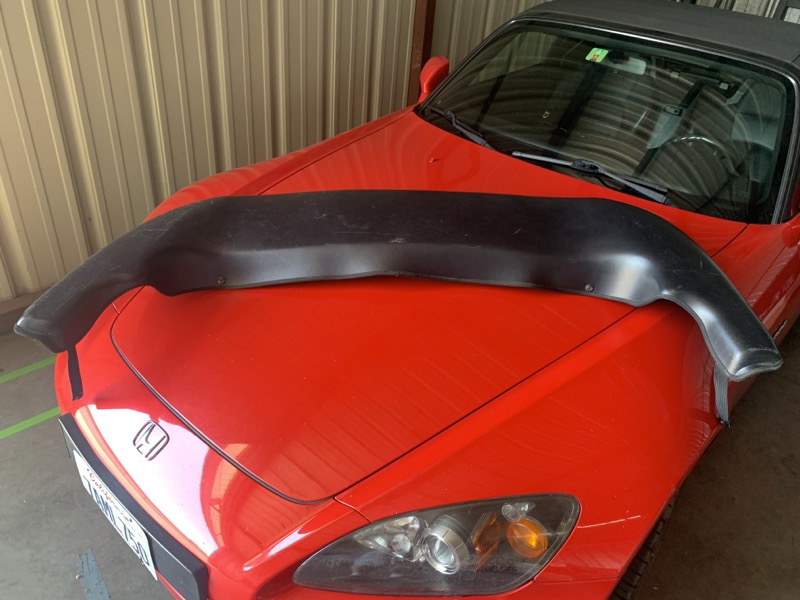
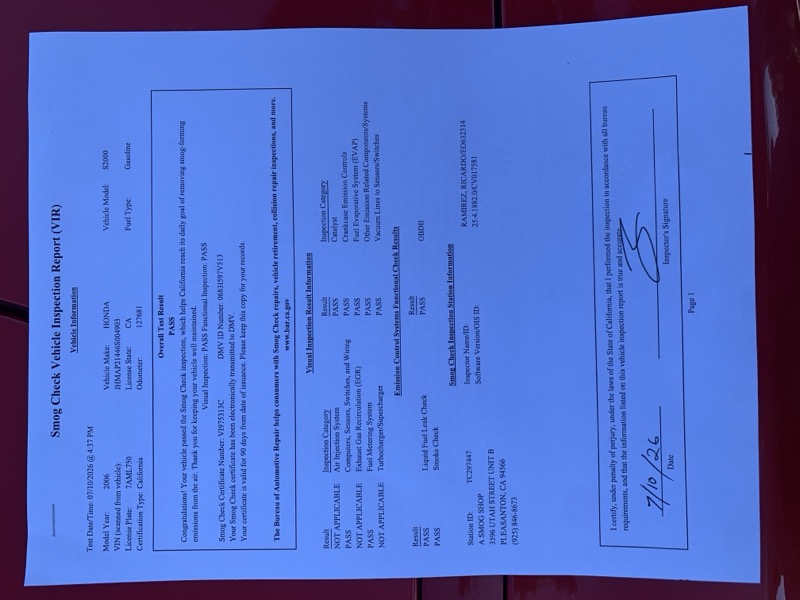
A visual archive of the journey — from Arlington delivery day paperwork through München arrival, Alpine roads, the Golden Gate, and Tracy. Click any image to view full size.
By the Numbers
- Current odometer
- 127,690 miles
- New short block & rebuild in Dec. 2024 @
- 117,791 miles
- Original VINs
- 10/10
- Mfg Year
- 2006
- Panama Canal crossings
- Two
- Pacific sailings
- Two
- Atlantic sailings
- Three
- Visits to the Caribbean
- Two
- Engines
- Two
- Top speed, top up
- 243 km/h
- Top speed, top down
- About 200 km/h
- Owners
- One
- Countries 'visited'
- Japan, USA, Germany,
Italy, Austria, Switzerland,
Liechtenstein